Subscribe to the LONGi Newsletter

In Ukraine, reliable electricity can determine whether a business keeps operating or has to shut down for hours. Every outage puts daily operations and revenue at risk. According to the Solar Energy Association of Ukraine (SEAU), many companies that relied on petrol and diesel generators between 2022 and 2024 are now replacing them with battery energy storage systems (BESS). Combined with solar, a battery can keep critical operations running during an outage and lower energy costs on normal days. Ukraine is already one of Europe's largest battery storage markets. Many companies are now planning their first system, and good results start with the right design for the site.
The largest solar and battery system is not necessarily the right one
When deciding how large a solar and battery storage system should be, the first thing to look at is the site's electricity meter data. It shows how much electricity the business uses throughout the day and when demand is highest. The next step is to separate critical loads, such as a production line, cold storage, IT servers, security systems and emergency lighting, from equipment that can wait during an outage. This determines how large the battery needs to be. The required capacity is often much smaller than the site's total electricity demand might suggest.
The same data helps determine how much solar capacity makes sense for the site. For most businesses, solar generation should match daytime electricity consumption. Filling the entire roof with modules is not necessarily the best option, as electricity consumed on site is generally more valuable than electricity exported to the grid.
Roof space and load-bearing capacity can also limit solar installations. LONGi’s Hi-MO X10 modules use back contact (BC) cell technology to generate more power from the available roof area. For roofs with weight restrictions, the Hi-MO X10 Guardian Light Design offers an alternative. It is approximately 30% lighter than conventional single-glass modules.
Battery power and capacity serve different purposes
A battery has two key ratings. Power, in kilowatts (kW), shows how much electricity it can supply at once. Capacity, in kilowatt-hours (kWh), determines how much energy is available. A battery with enough capacity but too little power will not start a production line. A powerful battery with too little capacity will run empty during a long outage.
Both ratings depend on the site's critical loads. If essential equipment needs 100 kW and the company wants four hours of backup, the battery needs at least 100 kW of power and 400 kWh of usable capacity, plus a safety margin. Additional capacity may be needed to account for system losses and maintain a safety reserve.
"One of the most common mistakes we see is choosing a battery size before assessing actual electricity demand. Some customers buy too little capacity and are disappointed during the first long outage. Others invest in capacity they never use. Before choosing a system, companies should ask their contractor to start with consumption data, identify which loads are critical and plan for future expansion," says Gencay Sandalci, Sales Manager at LONGi Solar Eastern Europe Distributed Generation.
A battery should provide economic value during normal operations and remain safe throughout its service life
In Ukraine, backup power is usually the first reason to buy a battery, but a battery that only waits for outages is an underused asset. The same system can store surplus solar power from the middle of the day for use in the evening, reduce peak demand and work with an existing diesel generator, which then runs less often. SEAU points out that, for businesses, the value of a battery also includes the losses avoided when essential operations keep running. Ukrainian companies can already sell electricity on the day-ahead, intraday and balancing markets, but for most commercial and industrial sites, backup and self-consumption remain the core of the business case.
A battery stays on site for many years, so safety deserves as much attention as capacity. Key questions include fire detection and suppression, ventilation, the operating temperature range, access for maintenance and emergency services, and the distance to critical loads and the grid connection point. Certification to recognized international standards and an early warning system that monitors battery cells can help operators identify developing faults early and respond before they become critical.
Solar and storage from one manufacturer simplify system planning
The performance of a battery storage system depends very much on how well its individual components work together and communicate with each other. Energy management, battery monitoring and temperature control, safety mechanisms must be closely coordinated to ensure efficient operation and detect potential problems early.
This is the principle behind LONGi ONE. Because all LONGi BESS systems are based on an integrated battery storage platform. It combines five core technologies that where all designed and built inhouse out of one hand: the energy management system (EMS), battery management system (BMS), power conversion system (PCS), thermal management system (TMS) and intelligent cell contact system (iCCS). Their coordinated operation supports system efficiency and safety.
Ukrainian businesses planning a new solar and storage installation can also benefit from LONGi's ability to supply both technologies. With solar modules and battery storage systems available from one manufacturer, LONGi and its local partners can plan both parts of the installation together, taking the site's electricity consumption and backup requirements into account.
"Ukrainian companies need systems that work from the first minute of an outage and keep working for many years. That is why we design PV and storage to work together. Hi-MO ONE Pro was developed for commercial and industrial sites, and together with our partners in Ukraine, we help companies plan the whole system, from the modules on the roof to the battery that keeps operations running," adds Sandalci.
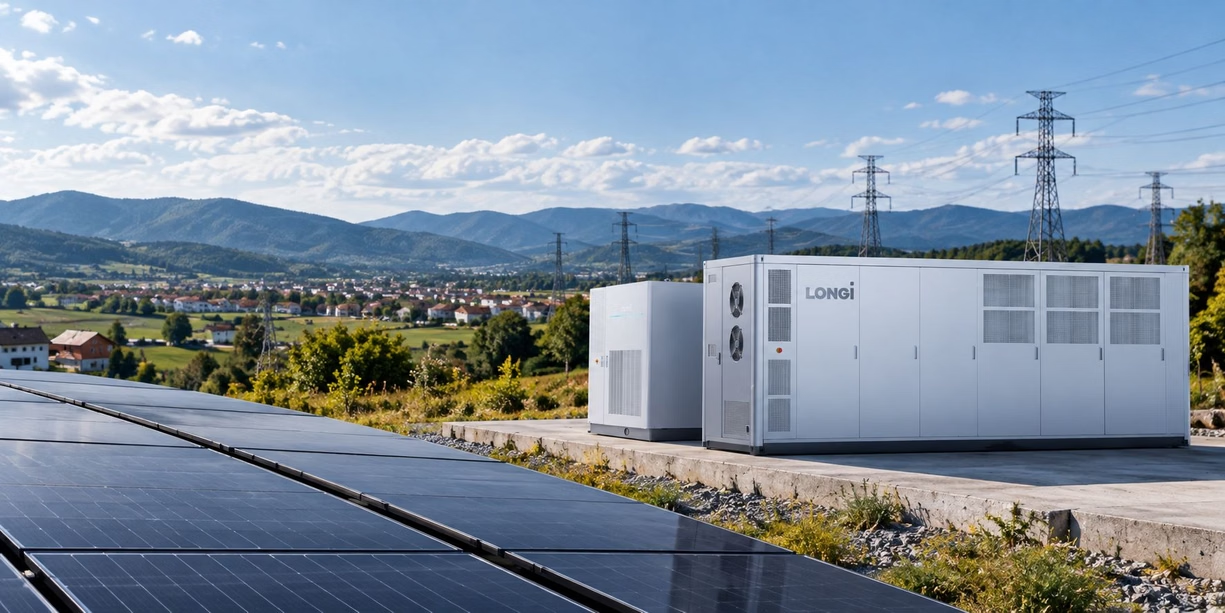
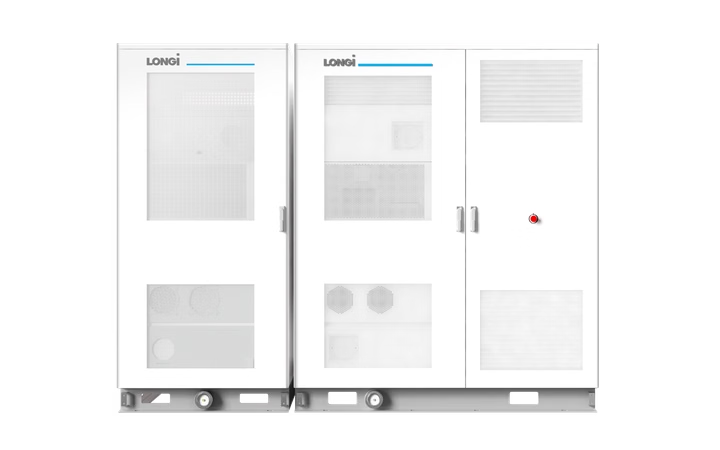
For commercial and industrial applications, LONGi offers the Hi-MO One Pro, a modular, liquid-cooled battery energy storage system with separate AC and DC cabinet configurations. Its flexible architecture allows businesses to expand storage capacity independently of power. Customers can adapt the system to their backup requirements and changing electricity demand. Each unit offers 261 kWh of storage capacity and is available with 125 kW or 250 kW power output, depending on the configuration. A 63 kW PV input connects solar directly, and the system can coordinate the grid, the battery and a diesel generator. Depending on system design and load profile, it can provide backup power for up to 24 hours. LONGi's patented early warning system monitors battery cells and can detect developing faults months before they become critical. Hi-MO One Pro has also undergone TÜV-witnessed UL 9540A fire safety testing, providing independent evidence of its ability to contain thermal runaway at cabinet level.
Six steps to prepare your solar and battery storage project
1. Collect at least 12 months of electricity consumption data. Obtain meter readings, electricity bills and, if available, hourly or 15-minute load profiles. These reveal seasonal differences in consumption and help identify periods of high demand.
2. Identify which operations must continue during an outage. List the equipment that needs backup power and record its electricity demand. Define how many hours each operation must continue without grid electricity. Check whether machinery has high starting currents that the battery must be able to handle.
3. Assess the available roof area and its structural limits. Establish how much space is suitable for solar modules and whether the roof can support their weight. Compare potential solar generation with daytime electricity consumption to determine how much of the electricity the business can use directly.
4. Define the battery's power and capacity requirements. Ask the installer to calculate the necessary power output in kW and usable storage capacity in kWh. Include system losses and a safety reserve. Consider whether future business expansion could increase electricity demand and whether the storage system can accommodate additional capacity.
5. Decide how the battery should operate when grid power is available. Determine whether it should store surplus solar electricity, reduce peak grid demand or support an existing diesel generator. Discuss how much battery capacity needs to remain reserved for unexpected outages. This is particularly important in Ukraine, where backup availability may take priority over daily electricity cost savings.
6. Review safety requirements and the backup configuration. Ask about fire safety testing, battery monitoring and the proposed installation location. Confirm how the system switches to backup power, whether additional switching equipment is required and which loads remain supplied during an outage. Check applicable permits and grid connection requirements with the installer.
A solar and storage projects rely on a clear understanding of the site's electricity demand and the operational consequences of an outage. Businesses that prepare this information can assess proposed system designs more effectively and avoid investing in capacity that does not match their actual needs.
Find out more about LONGi BESS solutions for C&I on our product page.
Sources:
European Battery Market Outlook 2026–2030, SolarPower Europe, 2026
Ukraine targets 1.5 GW solar, 3 GWh storage in 2026, TaiyangNews, 26.08.2026
Ukraine adds 1.1 GW of solar in H1, pv magazine, 23.09.2026

Lorem ipsum dolor sit amet, consectetur adipiscing elit. Suspendisse varius enim in eros elementum tristique. Duis cursus, mi quis viverra ornare, eros dolor interdum nulla, ut commodo diam libero vitae erat. Aenean faucibus nibh et justo cursus id rutrum lorem imperdiet. Nunc ut sem vitae risus tristique posuere.