A large share of a solar module’s carbon footprint arises in the factory, before the module ships. LONGi works on it at source through lower energy use per unit, more renewable electricity and lower-carbon materials. It then reports the result at product level, with independently verified data that buyers can check, compare and use in tenders and reporting.
Solar power cuts emissions over its lifetime, but making the modules carries its own footprint. Cells, glass and aluminium make up the largest share of it, and it is set before a module ships. Public tenders, corporate reporting rules and lender reviews now ask for that number in a standard form.
Some national schemes cap or score a module’s carbon footprint. France’s PPE2 tenders are the best-known example.
Buyers in scope of the CSRD report emissions from purchased goods. Product-level figures are the most reliable input.
ISO 14067 footprints, Environmental Product Declarations and national schemes use different rules, so a supplier needs to hold several.
A module that generates more over its life carries less footprint per kWh. See High-efficiency solar technology →
LONGi’s independently verified EPD for a 665 Wp back contact module shows where emissions arise. Pick a component to see its share, or drag to turn the module.
These are how much energy production uses, where that energy comes from, and what the module is made of.
LONGi ran 477 energy-saving projects across its sites, with expected savings of about 426 million kWh a year. The reduction against 2023 compares with a 9.14% target.
The 4.746 TWh came from on-site solar, renewable power purchases and certificates. Targets under RE100 are 70% by 2027 and 100% by 2028.
LONGi also buys lower-carbon silicon, including granular silicon. Higher-efficiency cells deliver more watts from the same raw material.
It is also a WEF Lighthouse Factory, and its unit energy consumption fell 24.6% in 2024. Remaining emissions are addressed with on-site solar, renewable electricity certificates and verified carbon credits.
LONGi agreed annual reduction targets with 37 of them. Its SBTi-approved goal is to cut purchased-goods emission intensity by 52% by 2030 against 2020.
LONGi’s greenhouse gas inventory covers Scope 1, 2 and 3 and has been verified by a third party for five consecutive years. Manufacturing bases are certified to ISO 14001 for environmental management and ISO 50001 for energy management (100% in 2024).
Life cycle assessments give a product carbon footprint under ISO 14067 and, where a market asks for it, an Environmental Product Declaration or a national format. Footprints cover raw materials to factory gate. EPDs add transport and end-of-life.
Certisolis issues the French ECS, Bureau Veritas the ISO 14067 declarations, and UL Solutions and the International EPD System the EPDs. The annual Sustainability Report follows GRI, references IFRS S1 and S2 and carries an independent assurance report.
Product carbon data comes in different formats depending on the market. This table shows what LONGi holds and what each document is typically used for.
Tender thresholds differ by scheme and are revised regularly. LONGi supplies the certificate and the certified value for the module series and tender in question.
Design, waste, transport and end-of-life each add to a module’s footprint.
The SBTi-approved targets are aligned with 1.5°C. Each bar shows where LONGi stood at the end of 2024.
Assessments by SBTi, CDP and IPE give buyers comparable benchmarks.


Documents and data LONGi provides so that product carbon figures can be checked and reused.
Each carries its certificate number and issuing body, so it can be attached to a bid.
This includes Scope 3 purchased goods. Company data follows GRI and IFRS S1 and S2.
Certificates come from independent bodies, and the Sustainability Report includes an independent assurance report.


Discover how higher solar module efficiency, lower material requirements and long-term performance can reduce lifecycle carbon emissions per kWh.
Read Blog →Operational greenhouse gas emissions at LONGi declined by 37 percent in 2024 against 2023. Technical efficiency and a 47.5 percent renewable energy ratio support CSRD compliance for European partners.
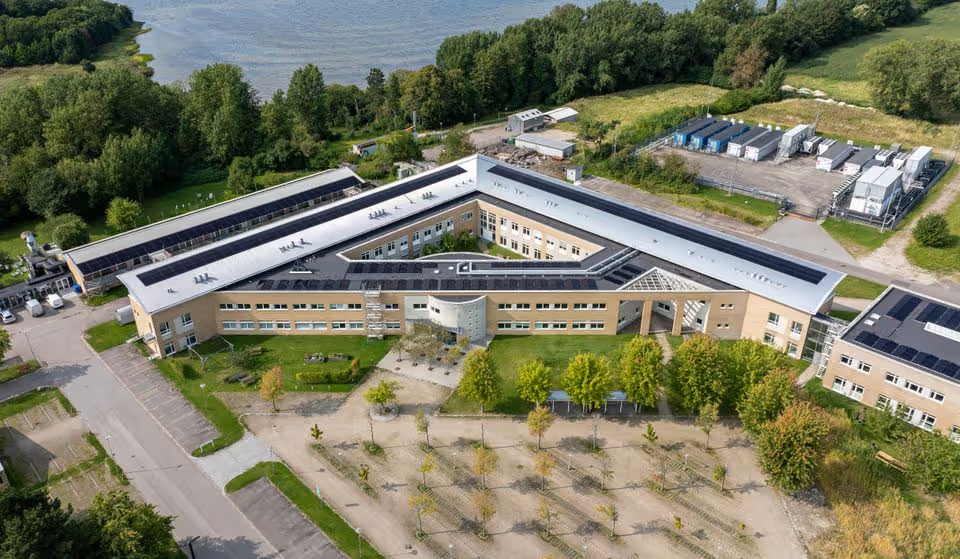
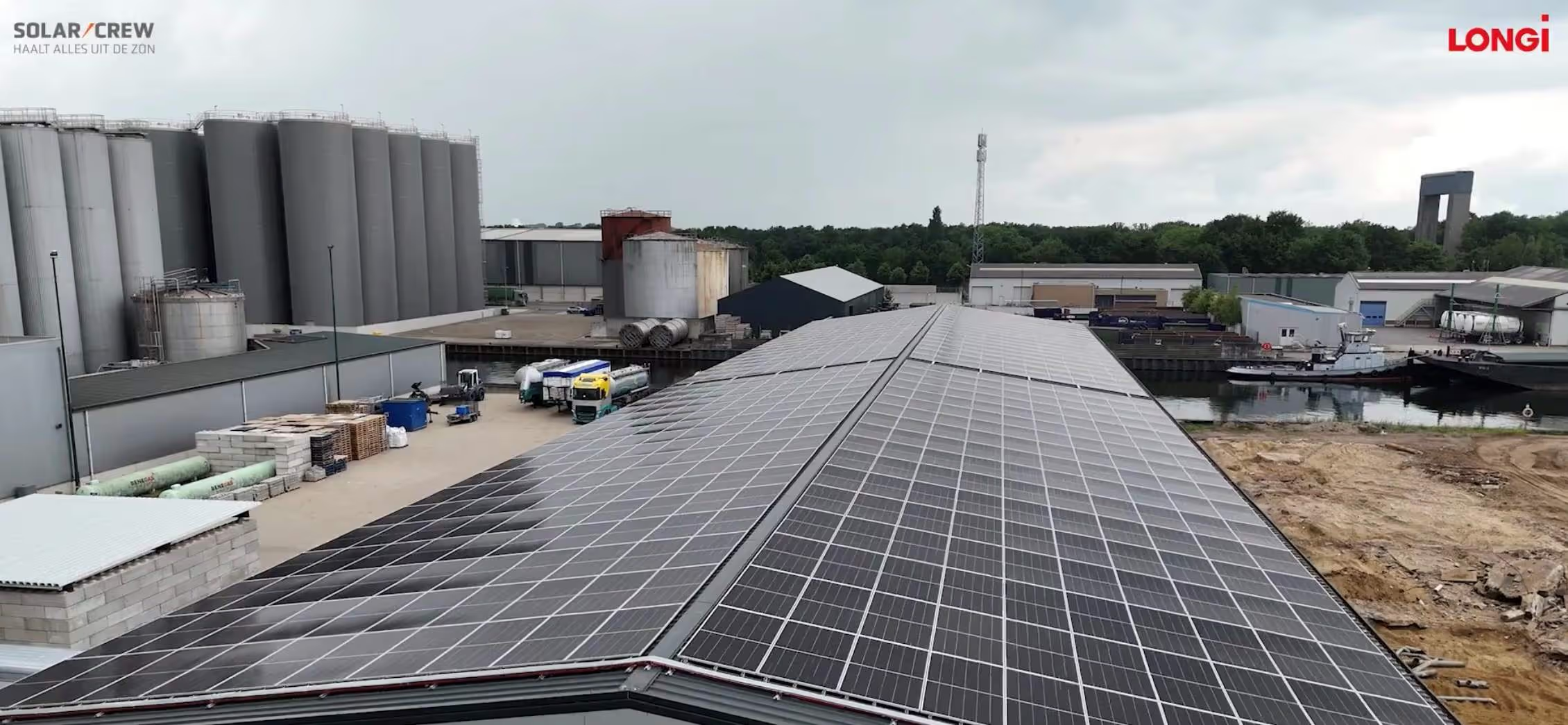
Read Blog →Four installations, from a university campus to a car park.
Aarhus, Denmark. 380 kWp, roof-mounted, installed with LONGi and Co2Pro.
County Clare, Ireland. 261 kWp, roof-mounted, with LONGi Hi-MO X10 back contact modules.
Nijmegen, Netherlands. 325 kWp, industrial rooftop, with LONGi back contact modules.
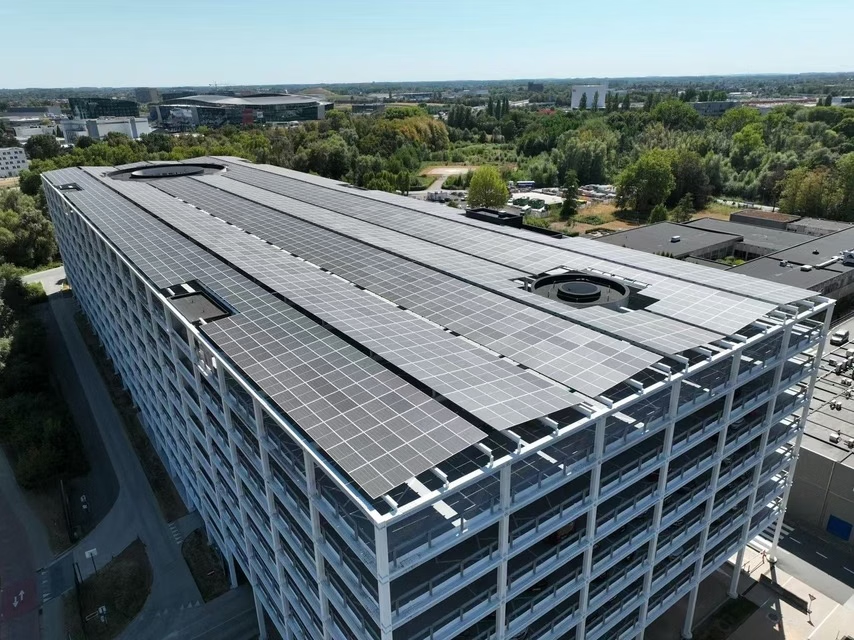
Ghent, Belgium. 1.2 MWp rooftop car park with anti-glare modules.
Answers on carbon data, certificates and tenders.
What is the difference between a PCF, an EPD and the French ECS?
All three express a product’s carbon footprint under different rules. A PCF follows ISO 14067 and is the general figure for corporate reporting. An EPD is a verified declaration of lifecycle impacts registered with a programme operator. The ECS is France’s simplified method for CRE tenders, issued by Certisolis. Figures from different methods should not be compared directly.
Which components account for the largest share of a module’s footprint?
In LONGi’s EPD for a 665 Wp back contact module, solar cells account for 59.3% of product-stage emissions, glass for 15.8% and the aluminium frame for 14.6%.
Does a higher-efficiency module have a lower footprint?
Per kWh it often does, because the module generates more over its life and needs less material per watt. Per module the result depends on how it is made. Lifetime output matters as much as rated efficiency.
Which LONGi modules hold a French ECS certificate?
LONGi’s mainstream Hi-MO series modules hold ECS certificates issued by Certisolis. Certificates are available on the Product Certificates page or from your account manager.
Can LONGi supply carbon documents for my tender?
Tell your account manager the market, the tender and the module series. LONGi will send the matching certificates and footprint data.
Are LONGi’s footprint figures independently verified?
Certificates are issued by bodies such as Certisolis, Bureau Veritas and UL Solutions, and company emissions are verified by a third party each year.
Is the Jiaxing zero-carbon factory carbon neutral?
The factory certification does not apply to the modules, and LONGi makes no carbon neutrality claim for them. Jiaxing is certified as a zero-carbon factory under ISO 14068. It reaches that status through on-site solar (about 16 GWh in 2024), renewable electricity certificates and verified carbon credits for remaining emissions, alongside a 24.6% fall in unit energy consumption.
What happens to LONGi modules at end of life?
LONGi takes part in WEEE take-back schemes in key European countries. Up to 94% of a module’s materials can be recycled and reused, and LONGi holds patents for low-energy recycling.
How much of LONGi’s electricity is renewable, and what is the target?
47.5% in 2024. The targets are 70% by 2027 and 100% by 2028 under RE100.
Tell us the market, the tender and the module series. We will send the matching certificates and product footprint data.