Subscribe to the LONGi Newsletter

Three years after LONGi founder Li Zhenguo introduced the Solar for All initiative in 2023, LONGi has continued to advance its goal of making solar energy more affordable, widely accessible, and suitable for different environments. Recent world records in solar cell efficiency, the introduction of next-generation back contact technology and new solar modules designed for challenging locations show how this ambition is taking shape.
A key question guides these developments: How can more people benefit from solar energy, including those living in places where costs, environmental conditions or safety requirements have previously made solar installations difficult?
Solar for All gains international recognition at COP29
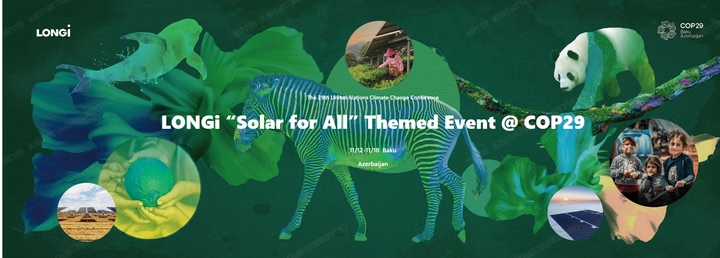
In November 2024, LONGi made Solar for All the central theme of its activities at the United Nations Climate Change Conference COP29 in Baku, Azerbaijan. LONGi brought together international organisations, including representatives of the UN Refugee Agency (UNHCR), to discuss energy equity and the role of innovation in making clean electricity accessible to more communities.
The conference also highlighted practical examples. LONGi and UNHCR completed a 700 kW solar installation at a humanitarian logistics centre in Uzbekistan, supporting the infrastructure used to deliver emergency assistance to refugees and displaced people.
LONGi also worked with the International Union for Conservation of Nature (IUCN) on an initiative that explores how solar energy can contribute to climate action while protecting biodiversity.
These activities reflect the wider purpose of Solar for All: making clean energy available to more people while considering communities' needs and the environment.
New efficiency records bring more affordable solar energy closer
Making solar electricity more affordable remains one of LONGi's most important contributions to Solar for All.
The principle is simple. The more sunlight a solar cell can turn into electricity, the more energy it can generate in the same space. This can reduce the cost of each unit of electricity over the lifetime of a solar installation.
In 2026, LONGi set two important world records. In July, its silicon-perovskite tandem solar cell achieved a certified efficiency of 35.5%. This next-generation technology combines two materials that absorb different parts of the solar spectrum, allowing the cell to generate more electricity than conventional single-layer designs.
In September, LONGi set another world record: 28.29% efficiency for a crystalline silicon solar cell, independently verified by Germany's Institute for Solar Energy Research Hamelin (ISFH).
Both achievements were recorded under laboratory conditions. They are important steps towards future commercial technologies that could produce more electricity on the same surface area.
For households, businesses and communities, the long-term benefit is plain: continued efficiency improvements can make solar installations more productive and help reduce the cost of solar electricity.
Next-generation back contact technology delivers strong efficiency gains
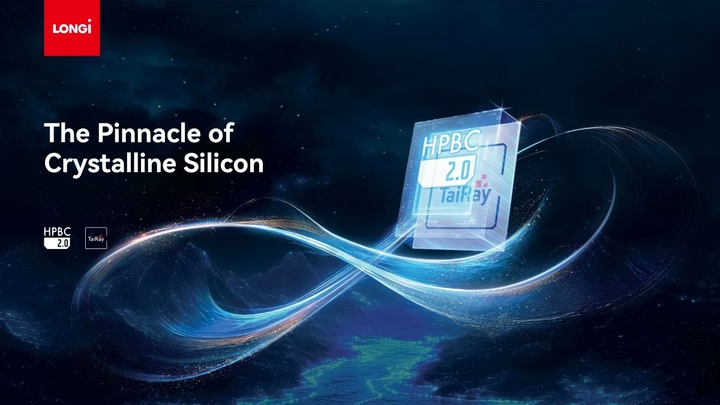
In 2024, LONGi introduced its second-generation Hybrid Passivated Back Contact technology, known as HPBC 2.0. Back contact design places the electrical contacts on the back of the solar cells, leaving the front surface free to capture more sunlight.
But the enhanced technology also included features like the shading optimizer. It helps improve electricity generation when leaves or other obstacles shade parts of a module - a common challenge on residential and commercial roofs.
HPBC 2.0 also introduced a zero-busbar (0BB) design, which reduces the amount of metal on the solar cell and allows more sunlight to be converted into electricity. Together with improvements in cell and module construction, the technology provides greater mechanical stability and better resistance to stresses caused by strong winds, heavy snow loads and other demanding weather conditions.
By bringing these improvements into mass-produced modules, LONGi is helping make high-efficiency solar technology available for everyday installations.
Solar technology reaches more tough environments
Solar for All also means making solar energy viable in locations in which conventional modules face practical restrictions.
Coastal areas are a good example. Salt, moisture, and strong winds can damage equipment over time, while many coastal communities have limited land available for renewable energy projects.
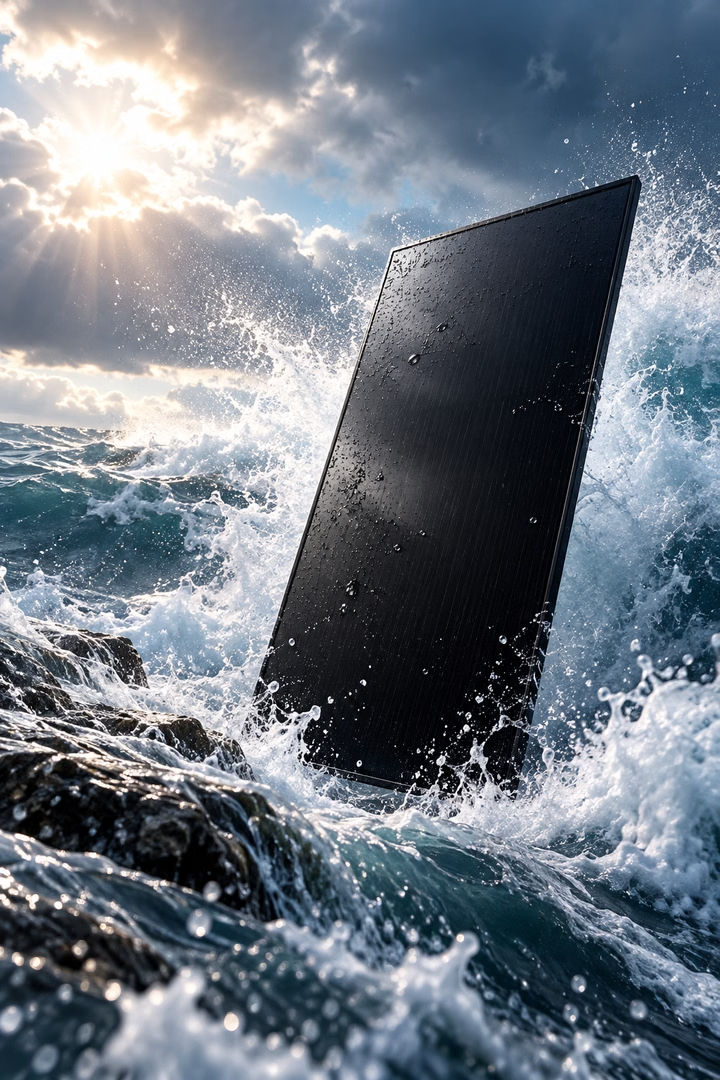
LONGi's Sea-Shield technology was developed specifically for these conditions. Its reinforced protection against salt corrosion, moisture, and harsh maritime environments helps make solar installations more reliable in coastal and offshore locations. The modules undergo demanding salt mist and environmental stress tests based on international IEC standards to assess their sturdiness under these conditions. This matters particularly for coastal communities and offshore installations, where equipment needs to withstand years of exposure to saltwater and extreme weather.
Fire safety presents another challenge, particularly on industrial buildings, data centres, warehouses and densely developed sites. LONGi's Fire-Resistant module technology includes additional safety measures designed to reduce fire-related risks. In laboratory tests, the modules withstood temperatures of approximately 1,000°C for up to 90 minutes without flames penetrating the module. The technology has also received UL 790 Class A certification from TÜV Rheinland, the highest classification under this US roofing fire test standard, as well as Class B under the European EN 13501-1 standard for reaction to fire. These results show how optimized module design can support safer solar installations on buildings where fire protection is especially important.
These features and special-scenario products serve a wider purpose. By dealing with the conditions that previously restricted solar installations in certain areas, LONGi can help make more locations suitable for clean electricity generation.
Anti-Glare technology helps solar energy become part of public spaces
One of the most recent developments is LONGi's Anti-Glare Pro technology, designed to reduce unwanted light reflections while preserving high electricity output.
Its importance becomes clear when considering where solar installations are needed.
Europe has millions of roofs, buildings, and infrastructure surfaces that could generate solar electricity. Yet some of these locations are difficult to use because reflected sunlight can disturb people or create safety concerns.
At airports, glare may impair visibility for pilots and air traffic personnel. Along railway lines and roads, strong reflections may distract drivers or train operators. In residential neighborhoods, reflections can affect nearby homes and lead to neighborly disputes. These concerns can restrict solar installations even when suitable surfaces are available.
LONGi's latest Anti-Glare Pro technology uses a specially developed glass surface that reduces reflected light to very low levels. Independent testing by TÜV Rheinland confirmed a Daylight Glare Probability of 0.29, which corresponds to the highest AAA classification under the EN 17037 assessment method.
Real installations already demonstrate the benefits. Near Amsterdam Schiphol Airport, a large solar project using LONGi Anti-Glare technology has been completed. It shows how solar electricity can be generated in areas with strict requirements for controlling light reflections. At Berlin Brandenburg Airport (BER), a 4.5 MWp solar installation is currently under construction, using LONGi Anti-Glare modules to meet the demanding safety requirements of an airport environment.
At Ghent University Hospital in Belgium, a 1.2 MWp solar car park uses LONGi Anti-Glare Pro modules. The installation is located next to the hospital's emergency heliport, where helicopter pilots need clear visibility during takeoffs and landings. The modules help reduce potentially disruptive reflections while allowing the hospital to generate clean electricity on an existing parking area.
A project in Zurich, Switzerland, demonstrates another application. A car repair shop installed 27 LONGi EcoLife Anti-Glare modules on its building façade, less than 50 meters from a railway line. Because reflections could affect train drivers or railway signals, the project required approval from Swiss Federal Railways (SBB). The low-reflection modules met the project's requirements, and SBB approved the installation.
These projects use different generations and configurations of LONGi's Anti-Glare technology. The latest Anti-Glare Pro development builds on this experience and further improves control of unwanted reflections.
The wider benefit is significant. By reducing possible safety risks and conflicts with surrounding communities, Anti-Glare technology can help make more existing surfaces suitable for solar electricity generation. This allows cities and businesses to expand renewable energy production while respecting the needs of people who live, travel, and work nearby.
For LONGi's “Solar for All” initiative, this is an important step toward making solar energy more widely accessible and better integrated into everyday life.
“Solar for All” keeps on expanding its reach
LONGi's progress since 2023 shows how the initiative connects scientific research with practical uses and social needs.
New efficiency records support the expansion of more affordable electricity. Advanced back contact technology brings higher energy yields into commercial applications. Specialised modules address environmental and safety challenges that can prevent solar installations in certain locations.
Alongside these developments, LONGi continues to work with international partners on projects that improve energy access for communities facing unreliable electricity supplies.
In Europe, the next challenge is to make better use of the space already available while ensuring that solar installations fulfill the needs of the people around them.
Solar for All remains LONGi's long-term devotion to making solar energy more affordable, more widely available, and easier to integrate into everyday life.

Lorem ipsum dolor sit amet, consectetur adipiscing elit. Suspendisse varius enim in eros elementum tristique. Duis cursus, mi quis viverra ornare, eros dolor interdum nulla, ut commodo diam libero vitae erat. Aenean faucibus nibh et justo cursus id rutrum lorem imperdiet. Nunc ut sem vitae risus tristique posuere.