Subscribe to the LONGi Newsletter

A floating photovoltaic installation in northern Italy underwent a major upgrade in 2024. Using LONGi back contact modules for both the refurbishment and the additional generating capacity, Italian energy company Bryo increased the plant's installed capacity to approximately 948 kWp without expanding its footprint on the water.
Floating photovoltaic systems can make use of former quarry lakes and artificial reservoirs to generate renewable electricity without occupying additional land. These installations also face specific technical requirements, particularly because their supporting structures and electrical components are exposed to persistent humidity and movement on the water.
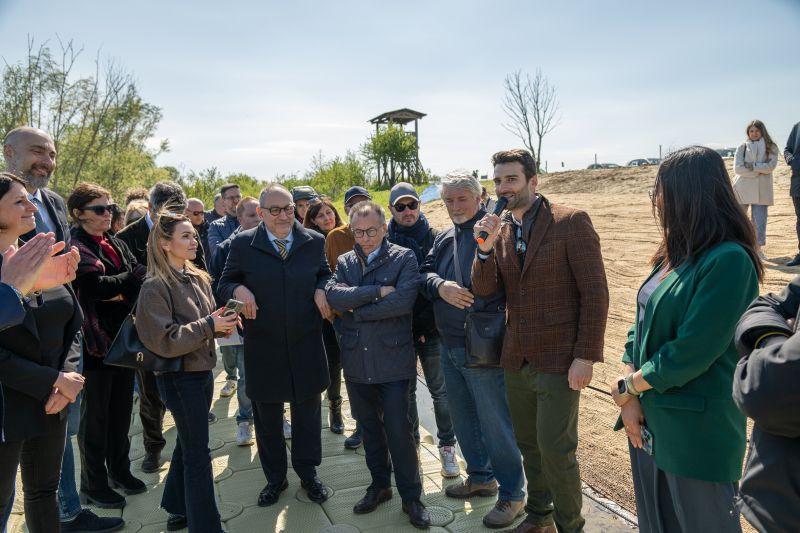
The Bubano floating PV installation, located near Imola in Italy's Emilia-Romagna region, is one of the earlier examples of this technology. Commissioned in 2011 with a capacity of 496.8 kWp, the plant underwent a major modernisation initiated by Bryo in 2024. The project nearly doubled its installed capacity through a combination of refurbishment and additional photovoltaic generation.

A floating solar installation modernised after more than a decade
The Bubano installation occupies a former quarry basin in the municipality of Mordano. When the plant entered operation in 2011, floating photovoltaics were still at an early stage of commercial development.
In 2024, Bryo began upgrading the installation in collaboration with LONGi Solar. The project involved replacing the original photovoltaic modules and inverters, renewing the floating structures and adding generating capacity within the existing installation area.
Both the refurbished section and the additional photovoltaic section use LONGi back contact modules rated at 585 Wp each. For the refurbishment, Bryo replaced the original modules with 856 LONGi modules, resulting in a capacity of 500.76 kWp. Their higher power output allowed the existing generating capacity to occupy less space on the floating structure.
The released area accommodated another 764 LONGi modules, adding 446.94 kWp of generating capacity. In total, the upgraded plant uses 1,620 modules and has a nominal capacity of 947.7 kWp, compared with 496.8 kWp before the modernisation.
Bryo invested approximately €1 million in the project, including the replacement of the inverters and renewal of the floating structures. The refurbishment section was expected to generate 553.5 MWh annually, while the additional capacity was projected to contribute another 511 MWh. Combined, the upgraded installation was forecast to produce approximately 1.06 GWh of electricity per year.
Back contact technology enables higher capacity on the existing water surface
LONGi's back contact technology places the electrical contacts on the rear of the solar cells, removing the front-side metal grid lines and increasing the surface available for light absorption. This cell architecture supports higher module efficiency and power output.
For floating PV installations, module power is particularly relevant where the available water surface is limited. At Bubano, the replacement modules made it possible to maintain the original generation capacity within a smaller area, leaving sufficient space for the additional photovoltaic section.
The operating environment also affects module selection and system design. Floating installations experience continuous exposure to humidity, while movement of the supporting structures places specific demands on mechanical connections and electrical infrastructure.
Water can also moderate module operating temperatures under certain conditions. Since photovoltaic efficiency generally decreases as cell temperature rises, lower operating temperatures may contribute to higher electricity generation. The extent of this effect depends on local conditions and the floating system's design. At Bubano, the increase in installed capacity is directly attributable to the modernisation and more efficient use of the available space.
Floating PV generation contributes to a local renewable energy community
The Bubano installation is associated with the Renewable Energy Community of the Imola district, known as the CER del Circondario Imolese. Developed with the involvement of Bryo and the Municipality of Imola, the community enables local participants to benefit from renewable electricity generation and energy sharing. The additional photovoltaic capacity at Bubano was planned to supply electricity to the community.
According to Bryo, the installation could generate electricity equivalent to the annual consumption of approximately 200 households. The original project announcement also estimated avoided emissions of around 530 tonnes of CO₂ annually.
The project therefore combines the technical modernisation of an existing floating PV plant with additional renewable electricity generation for the surrounding region.
The economic and environmental relevance of floating solar
Floating photovoltaics offer additional opportunities for renewable electricity generation, particularly where suitable land is scarce or subject to competing uses. A World Bank study estimated that covering just 1% of the world's assessed man-made reservoir surfaces could accommodate approximately 404 GWp of floating solar capacity.
Research also suggests that the proximity of water can improve photovoltaic performance. A peer-reviewed study based on field measurements in the Netherlands and Singapore found that cooling effects could increase annual energy yield by up to 3% and 6%, respectively, depending on climate and system design. Such gains may contribute to project economics, although floating structures and installation requirements generally involve higher upfront costs than conventional ground-mounted systems.
The Bubano modernisation highlights a further economic consideration. Upgrading an existing floating installation can create room for additional generating capacity without requiring more water surface. In this case, Bryo nearly doubled the plant's nominal capacity while retaining its original footprint, allowing an established renewable energy asset to produce substantially more electricity within the same site boundaries.

Lorem ipsum dolor sit amet, consectetur adipiscing elit. Suspendisse varius enim in eros elementum tristique. Duis cursus, mi quis viverra ornare, eros dolor interdum nulla, ut commodo diam libero vitae erat. Aenean faucibus nibh et justo cursus id rutrum lorem imperdiet. Nunc ut sem vitae risus tristique posuere.