Subscribe to the LONGi Newsletter

In August 2026, electricity on the Greek wholesale market sold for around €38 per megawatt hour at midday on average. In the evening, after sunset, it cost around €206. For businesses with rooftop or on-site solar, this gap is becoming one of the most important factors in what their PV system is worth.
The value of midday solar electricity is set to fall further. Aurora Energy Research, an independent energy market analytics and consulting company, expects electricity from Greek solar plants to be worth 43% less than the average wholesale price between 2027 and 2030, and 59% less by the 2050s. Bulgaria and Romania are moving in the same direction.
It still matters how much electricity a solar system produces, but increasingly, it also matters when that electricity is used.
Solar electricity is losing value when generation is the highest
Solar plants across the region produce at the same time, around the middle of the day. As more capacity is connected, supply in these hours grows faster than demand, and wholesale prices fall. This effect is often called solar cannibalisation. It is measured through the capture price, the average price solar generation actually receives compared with the average price across all hours.
The more solar is built, the wider this gap becomes. In Bulgaria and Romania, Aurora expects it to reach more than 40% by 2050. On days of strong sunshine, the system may also have more electricity than it can use, and part of the solar output has to be curtailed.
For a business with its own PV power generation, the result is a growing difference between two prices. Surplus electricity exported at midday earns less, while electricity bought from the grid in the evening, after solar output has stopped, remains expensive.
Batteries move solar power to the hours when it is worth more
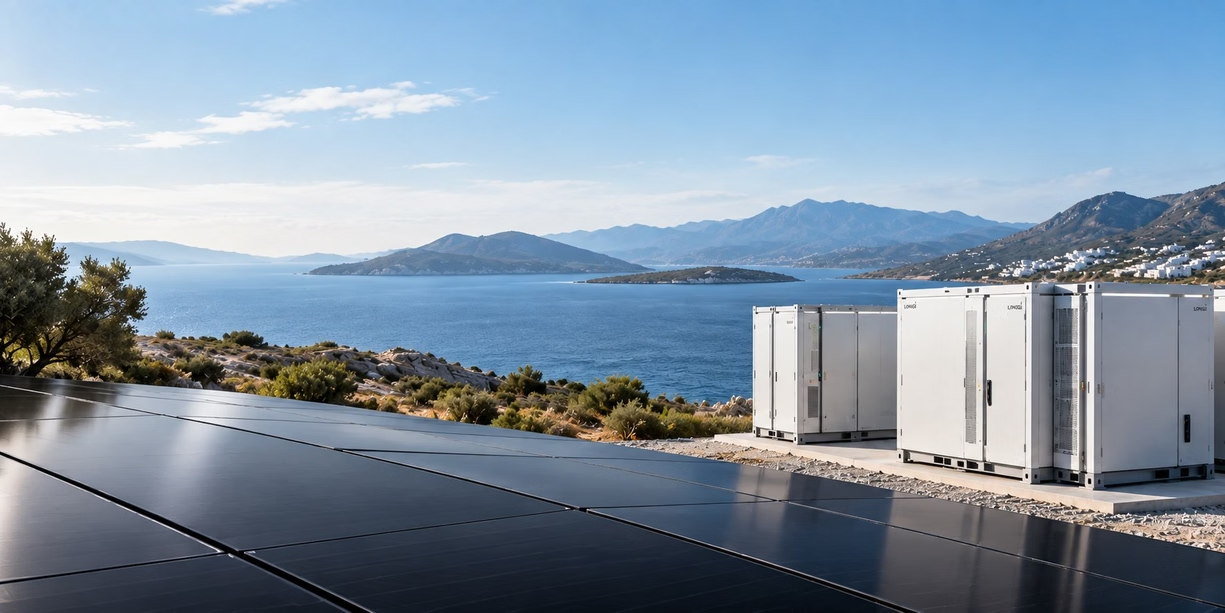
Batteries store electricity when solar output is high and release it later in the day. Bulgaria shows how this works in practice. The country has built over 5 GW of batteries in the last years, more than any other country in the region. In August 2026, its average midday price stayed near €67/MWh, while in neighbouring Greece, with far less storage, it fell to around €38/MWh. According to Aurora, this pattern is consistent with batteries charging on the midday solar surplus and returning the electricity later in the day. For solar producers, it means that electricity generated at midday keeps more of its value.
On a business site, the logic is the same at a smaller scale. Solar electricity that would otherwise be exported at a low price can cover the company's own consumption in the evening, reduce demand peaks and, where needed, keep critical equipment running during a grid interruption.
As more batteries enter the market, price gaps narrow
Interest in storage across the region is strong. Aurora finds that announced projects in Southeast Europe are several times larger than the capacity it expects to be built by 2030. In Greece, a scheme offering priority grid connection to 4.7 GW of storage attracted 12.15 GW of applications.
Not all of these projects will be built, but the direction is clear. Every battery that buys cheap midday electricity and sells it in the evening narrows the price gap for the next one. Bulgaria shows this as well. Its average daily price spread in August, the difference between the cheapest and the most expensive hour, fell from €260/MWh in 2024 to €139/MWh in 2026.
Aurora expects battery margins in the region to fall by 14 to 28% between 2029 and 2040. Batteries that earn only from trading price differences will feel this most. When batteries are paired with solar, surplus generation can instead be stored for use later on site which reduces grid purchases.
Pairing solar and storage can lower costs and improve returns
When solar and storage share a site, they also share the grid connection, the land and much of the installation and development work. This can lower investment costs by up to 15% and operating costs by around 10%. The battery can charge directly from the solar plant instead of buying electricity from the grid. These savings, together with the ability to charge from the solar plant, can improve returns compared with developing the two assets separately.
"Storage is not competing with solar for capital. It is what keeps solar's revenue up. Across Southeast Europe, a project that combines the two is now stronger than either asset on its own," said Dr Evangelos Gazis, Head of Southeast Europe at Aurora Energy Research.

Aurora expects this advantage to be the largest in Southeast Europe. In Romania and Bulgaria, it expects more than 30% of solar capacity to be paired with storage by 2030.
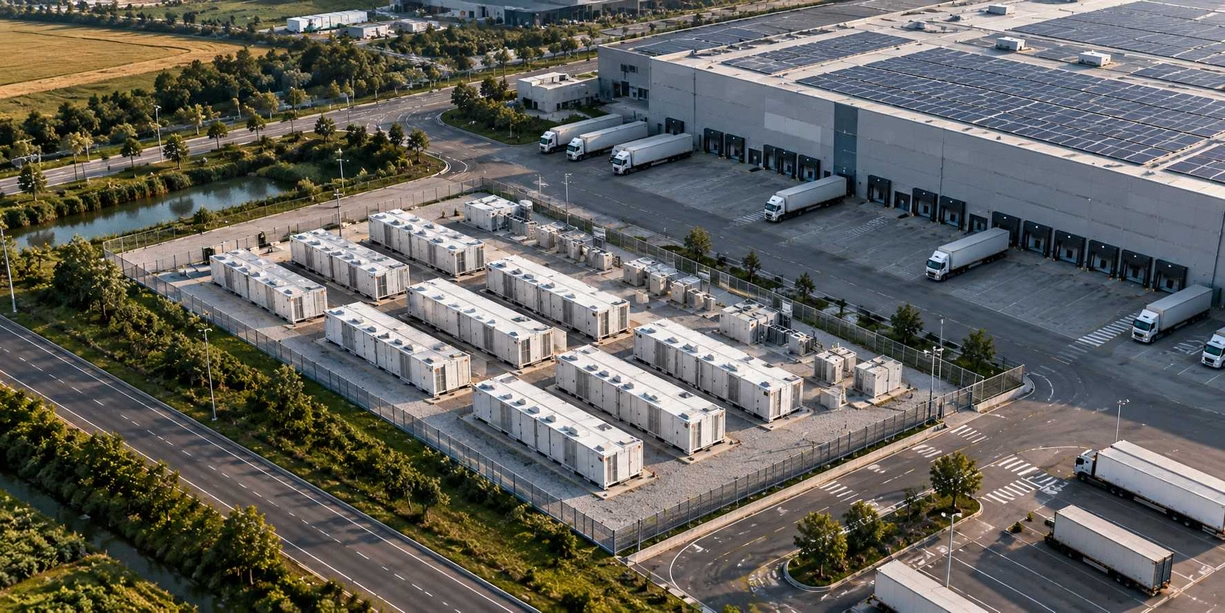
The same principle applies on commercial and industrial sites. A business that adds a battery to its existing PV system uses the connection and infrastructure it already has, and keeps more of the value of the electricity it produces.
LONGi expands its storage portfolio for commercial and industrial users
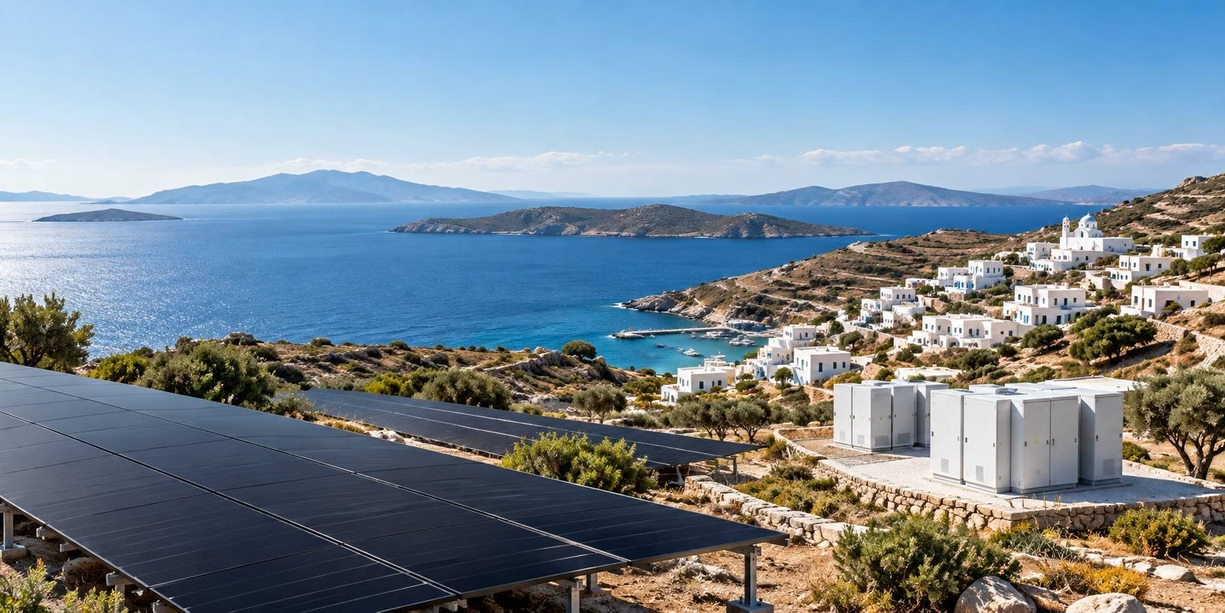
Demand from businesses is already visible. In Greece, Aurora identifies 333 MW of batteries planned by commercial consumers alongside their solar systems under the national “Storage Systems for Businesses” program.
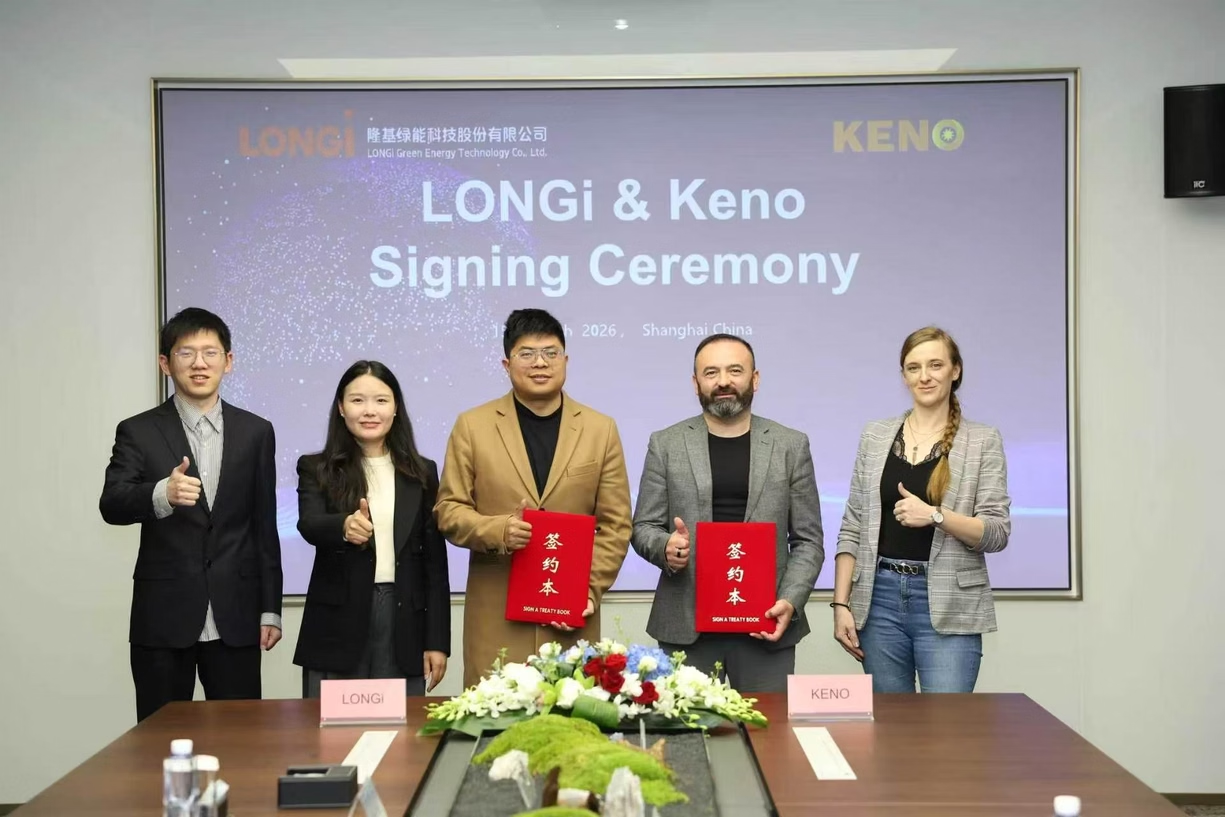
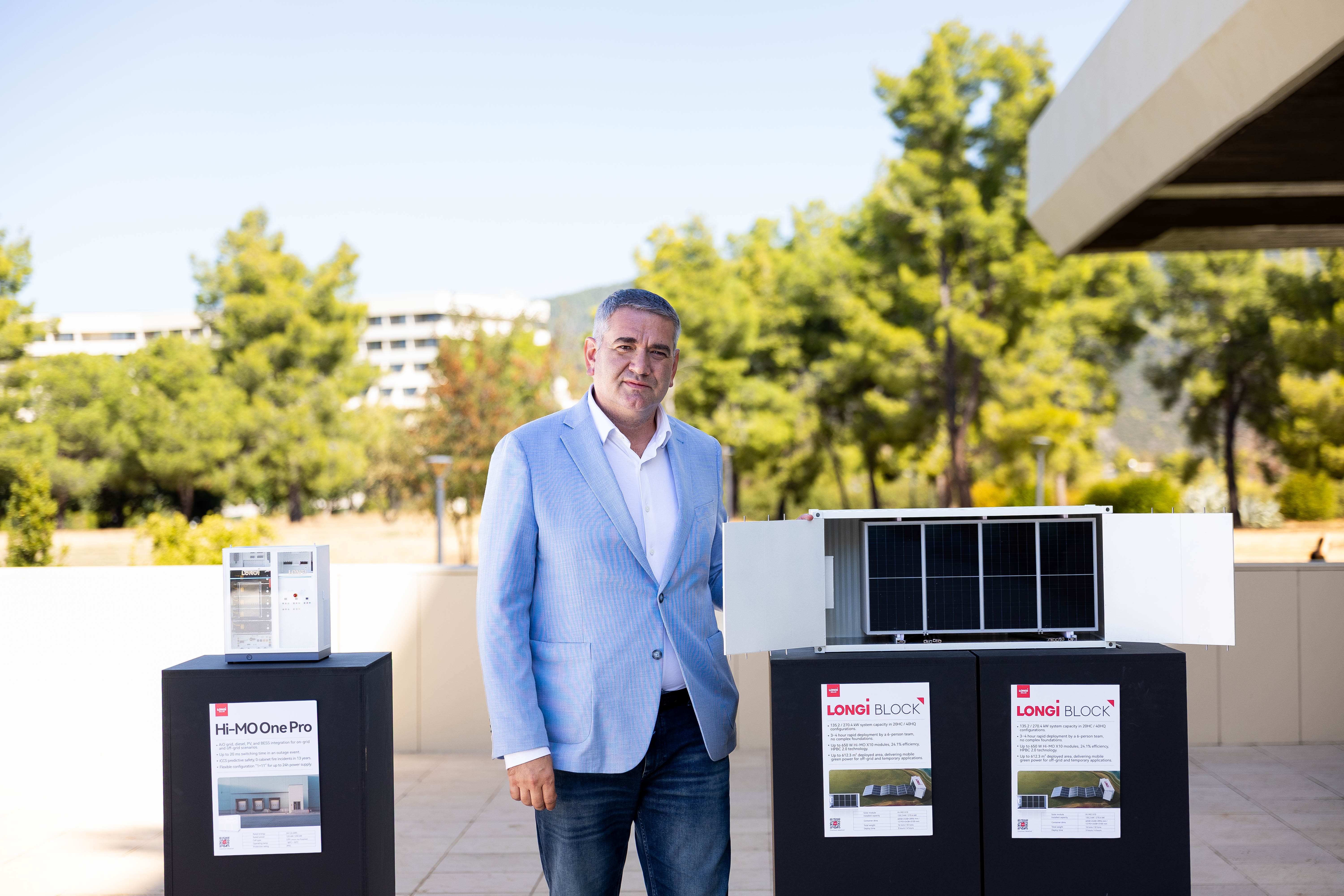
LONGi's offer for these users is built around the LONGi ONE storage portfolio, presented to partners from across the region in Halkidiki, Greece, in September 2026.
"For a business, a battery is only worth adding if it works reliably with the solar system it already has. That is why we built LONGi ONE as an integrated system from one supplier. Installers do not have to combine components from different vendors, and the customer has one point of responsibility," said Adrian Kočan, General Manager Eastern Europe for Distributed Generation at LONGi Solar.
Hi-MO One MONA, a 125 kW / 261 kWh system for C&I applications, combines liquid-cooled LFP storage with LONGi-developed power conversion, battery, energy and thermal management. Its Intelligent Cell Contact System (iCCS) monitors each cell to detect developing abnormalities early. OneNexus H2 extends these capabilities to microgrids, integrating PV, batteries, grid and generator supply in one energy management architecture, with 10 ms on/off-grid switching and black start for sites that need continuity of supply. The portfolio also includes Hi-MO One Pro, a modular C&I system whose storage capacity can be extended with additional cabinets independently of power output.
Storage is becoming part of the business case for solar
Batteries are only part of the response to Southeast Europe's solar growth. The region also needs stronger grids, more interconnection and greater flexibility in how electricity is used. For businesses with their own PV systems, storage is one of the measures they can take directly.
For companies across the region, the value of solar increasingly depends on when its electricity can be used. Storage allows businesses to shift surplus generation from low-value midday hours to times when they would otherwise buy electricity from the grid.
Source: Aurora Energy Research, RES and BESS market outlookfor SEE and CEE, September 2026.

Lorem ipsum dolor sit amet, consectetur adipiscing elit. Suspendisse varius enim in eros elementum tristique. Duis cursus, mi quis viverra ornare, eros dolor interdum nulla, ut commodo diam libero vitae erat. Aenean faucibus nibh et justo cursus id rutrum lorem imperdiet. Nunc ut sem vitae risus tristique posuere.