Subscribe to the LONGi Newsletter

Since 2025, small and medium-sized businesses in Poland have been buying energy without the protection of the government’s maximum price mechanism, while fixed charges on their bills keep rising. For the food service sector, adapting to this change has been particularly difficult. Restaurants are among the most energy-intensive service buildings, and energy costs have a direct impact on their financial results. At the same time, the energy consumption profile of a restaurant is a good match for solar PV.
The end of frozen energy prices for businesses
After the outbreak of the war in Ukraine, energy prices in Poland rose sharply. In response, in 2022 the government introduced an emergency measures act that set a maximum electricity price for small and medium-sized enterprises, local governments and public institutions. This was not a subsidy paid out to companies. Business owners submitted a declaration to their energy supplier and paid a lower rate, and the state covered the difference for suppliers in the form of compensation.
The mechanism expired at the end of 2024. Since January 2025, companies, including restaurants, have been buying energy on market terms. And wholesale prices are not falling. According to the Energy Regulatory Office (URE), the average electricity sales price on the competitive market in the first quarter of 2026 was PLN 486.14 per MWh, 2.5% higher than a year earlier.
On top of this, other charges on the bill are rising. In 2026, the capacity fee and distribution tariffs both went up, and the increases are felt most by customers on C tariffs, which are the tariff groups for businesses. There are currently no new support schemes for companies, so business owners who want to lower their energy costs are investing in their own energy sources on their own.
A restaurant is one of the most energy-intensive buildings in the HoReCa sector
In a quick service restaurant, cold rooms, freezers and ventilation run around the clock, while the kitchen and lighting operate from opening to closing time. Add to this fryers, coffee machines, ovens and air conditioning. A relatively small floor area therefore houses many appliances with high power demand. This is why restaurants are considered some of the most energy-intensive commercial buildings. Frequently cited estimates put their energy use per square metre at five to seven times higher than in other commercial buildings, and up to ten times higher for busy quick service restaurants (ENERGY STAR data).
Refrigeration accounts for the largest share of electricity use, followed by lighting and air conditioning. In European studies of restaurants, refrigeration alone was responsible for around 40% of electricity consumption. A restaurant therefore has a constant, high demand for energy throughout the day, and in summer this demand grows further as cold rooms and air conditioning work harder.
The number of restaurants in Poland is growing, but profitability varies
According to Statistics Poland (GUS), at the end of 2024 there were almost 30,000 restaurants and more than 26,000 bars operating in Poland. Based on the growth in the number of companies in the sector, BOŚ Bank estimates that by the end of 2025 this had reached around 32,500 restaurants and 27,500 bars. Including cafés, food trucks and other outlets, there are around 100,000 food service locations in Poland, according to data from the business information agency Dun & Bradstreet.
Profitability in the sector varies widely. Larger food service companies achieve a gross profit margin of 8 to 10%, but in micro-businesses, which run three quarters of restaurants and bars in Poland, it was just 1.6% in 2024. Energy is not the largest item in a restaurant’s cost structure, but it is a cost that owners can actually influence, regardless of the size of their business.
Self-consumption determines the profitability of solar PV in a restaurant
What matters most for the profitability of a commercial PV installation is how much of the energy it produces is used on site. Every kilowatt-hour from the roof that is used immediately in the kitchen or cold room is a kilowatt-hour that does not have to be bought from the grid together with distribution charges. This is especially important under the net-billing system, which applies to owners of micro-installations of up to 50 kW. Under net-billing, energy fed into the grid is valued at the market price of electricity, which is usually lower than the total cost of buying power. A restaurant whose refrigeration equipment runs all day uses virtually all of the energy from its roof in real time.
After sunset, during the evening rush, the restaurant draws energy from the grid. A possible next step is an energy storage system, which makes it possible to shift part of the daytime production to the evening hours.
As experts from the installation company Etikon point out, the main limitation is therefore not consumption but the roof. A project in Kwidzyn shows why.
A 50 kWp installation on a restaurant roof in Kwidzyn, Poland
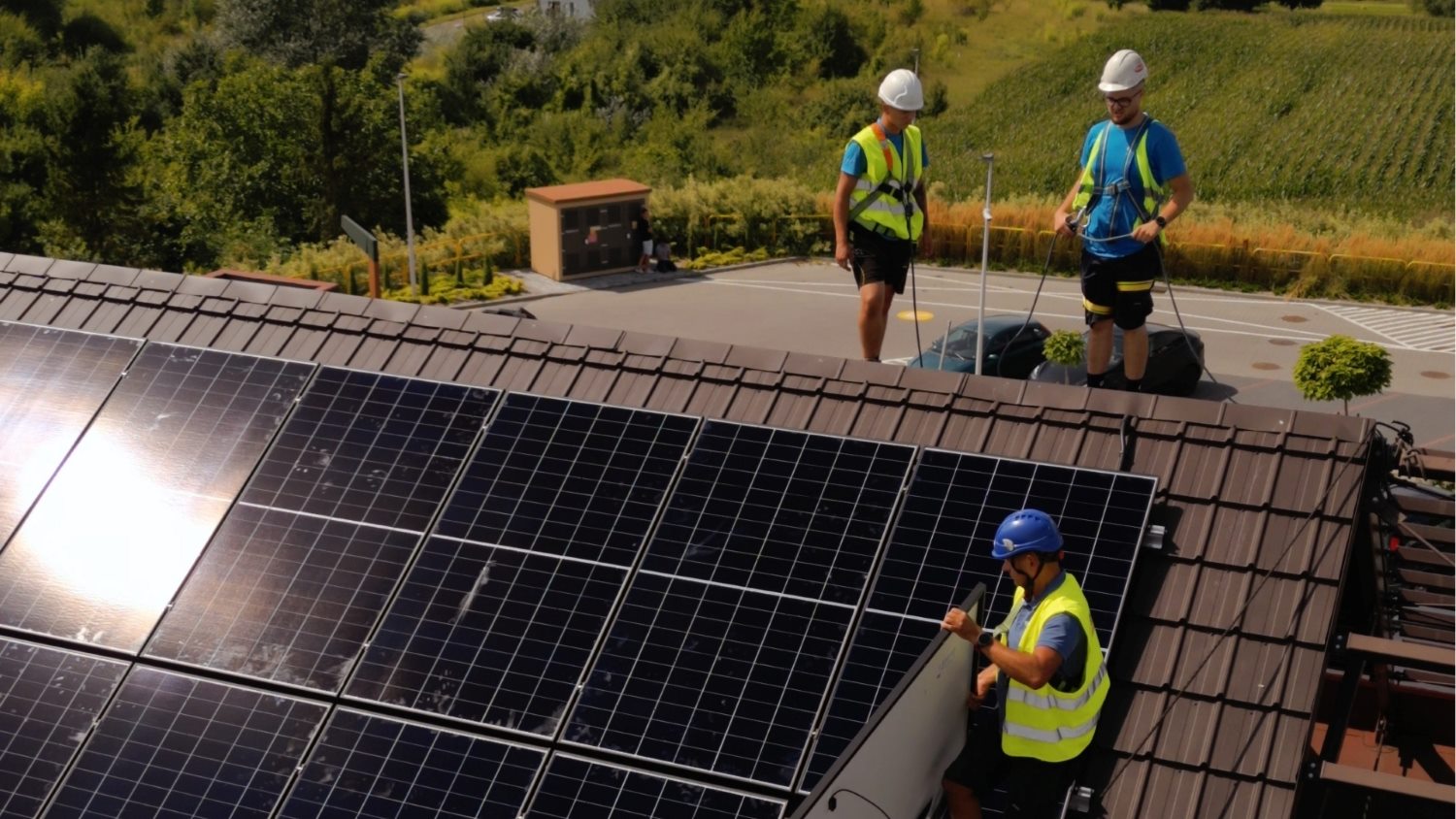
In August 2026, a 50 kWp installation was commissioned on the roof of a quick service restaurant in Kwidzyn, northern Poland. It consists of 93 LONGi Hi-MO X10 LR7-60HVD modules with HPBC 2.0 (Hybrid Passivated Back Contact) technology, mounted on an Enzeit Technik structure. The investor’s goal was to reduce day-to-day electricity bills.
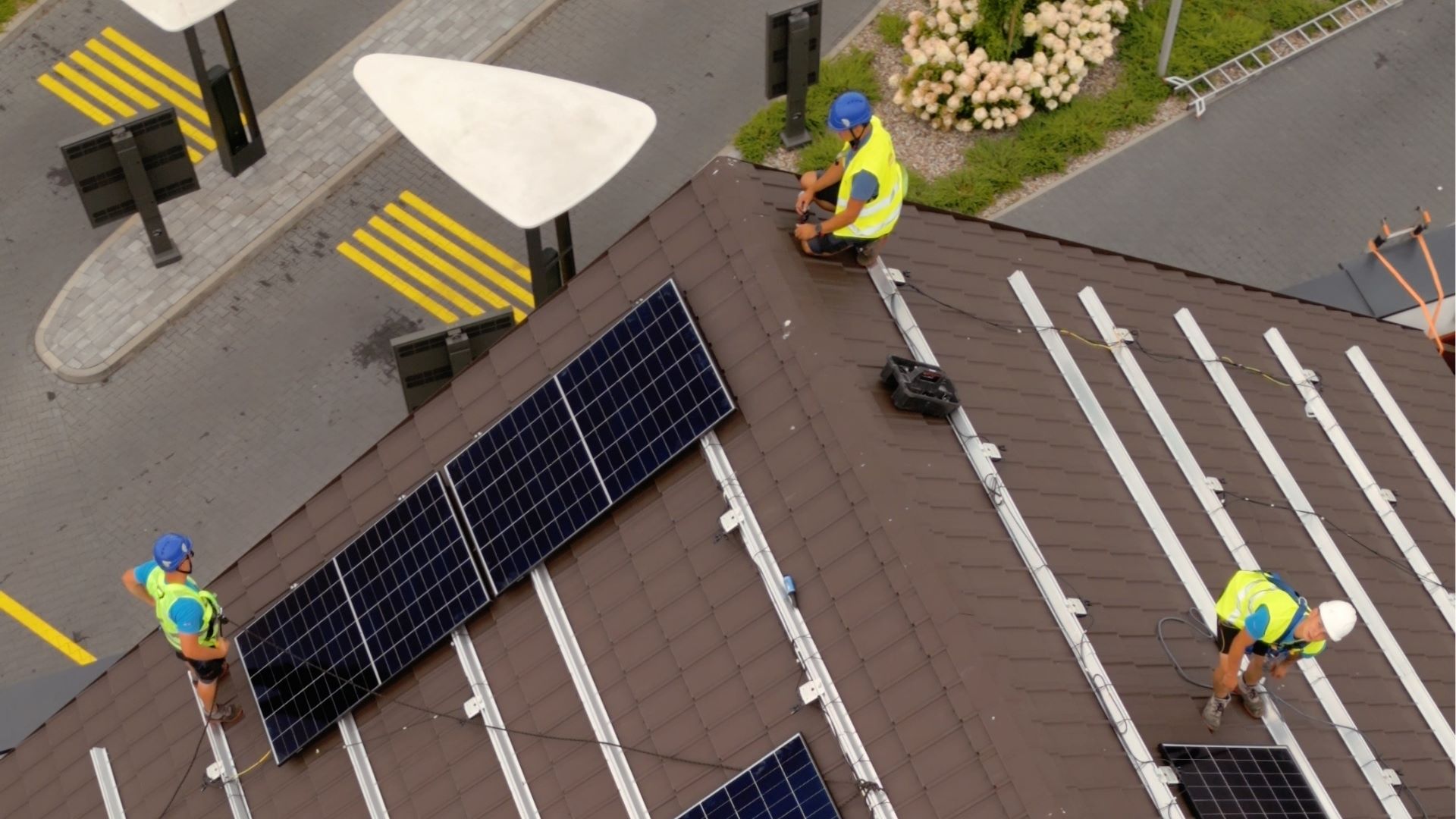
The roof of a food service building can be a challenge for a PV installer. It holds fans, kitchen extractors and refrigeration units. Each of these takes up space and casts shade on nearby modules during the day. Refrigeration units also blow out warm air, which raises the temperature around the panels.
“Restaurants are a business with a big appetite for energy, but at first glance we thought we would only fit a few modules here. The roof was unusual and demanding, and roofs like this are common in food service. We had to adapt the module layout to its structure, and partial shading could not be avoided completely, so we chose LONGi modules with technology that reduces shading losses. This allowed us to use parts of the roof that would not have been an option with standard panels,” says Dariusz Turek of the installation company Etikon, which carried out the project.
"Restaurant roofs usually come with similar constraints: little space and a lot of equipment. In Kwidzyn, we adapted the layout of the mounting structure to the pitched roof and the equipment on it, using standard components of our system. This solution can be quickly replicated at other sites," says Dominik Połoniewicz, Chief Design Engineer at Enzeit Technik, the company that supplied the mounting structure.
Back contact technology on a partially shaded roof
On a crowded roof, three things matter. How much power fits on the available area, how the modules perform in shade and how they cope with high temperatures.
In Hi-MO X10 modules, all electrical contacts are hidden on the back of the cell, so the entire front surface works to produce energy. On this roof, performance in partial shade was the most important factor. In conventional modules, shade on a single cell can switch off a whole group of cells. In Hi-MO X10, losses are limited to the shaded area. According to LONGi data, under shading the module loses over 70% less power than TOPCon modules, and hot spot temperatures are 28% lower.
“Restaurants use a lot of energy during the day, so solar PV is a natural choice for them. However, their roofs are usually taken up by technical equipment. The Kwidzyn project shows that high-efficiency modules make it possible to make good use of even a very limited area,” says Daniel Moczulski, Sales Director for Central and Eastern Europe, LONGi Solar (DG).
Installing the entire system took two days and did not disrupt the restaurant’s operations. Guests kept ordering food while new rows of modules appeared on the roof.
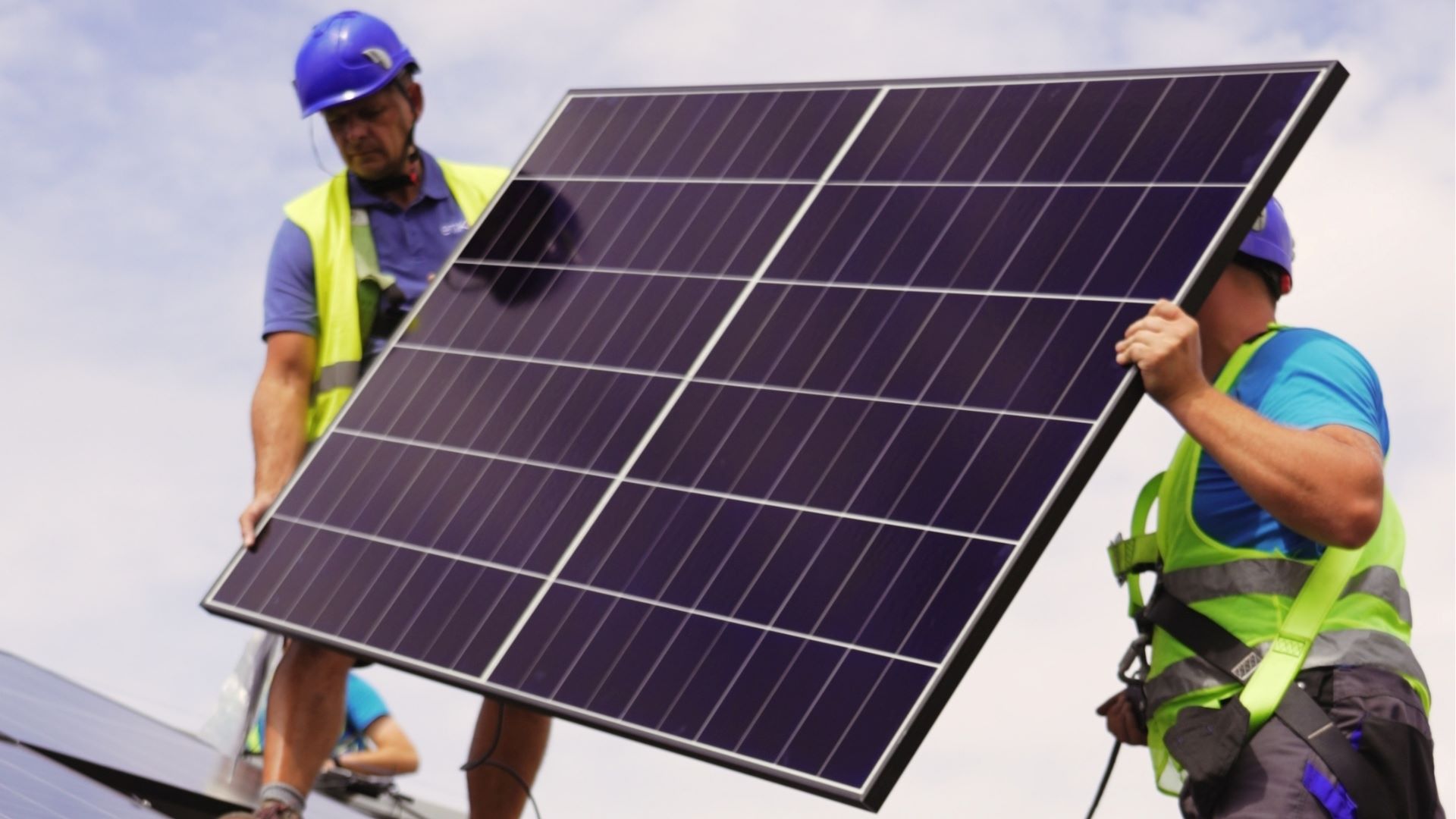
Many restaurants across Poland have similar roofs. Solar PV gives them lower bills and predictable energy costs
The roofs of quick service restaurants across Poland look much the same. They are small, crowded with equipment and partially shaded. With energy prices rising and restaurants needing power all day long, even an area like this makes a difference. The Kwidzyn project shows that the right choice of module and mounting structure can turn it into an energy source for the restaurant, without interrupting its operations.
For the investor, the economics come first. Because the restaurant uses almost all of the energy from its roof in real time, every kilowatt-hour produced replaces energy that would otherwise have to be bought from the grid. The savings therefore cover not only the price of the energy itself, but also variable distribution charges.
Predictability is just as important. Market energy prices change from year to year, while the cost of energy from your own installation is known from the day it is commissioned. The modules work for several decades, and thanks to low degradation they retain around 88.8% of their rated power after 30 years. The investor therefore secures part of the restaurant’s energy needs for a long time, regardless of how prices change. The higher grid electricity prices rise, the faster the investment pays for itself.

Lorem ipsum dolor sit amet, consectetur adipiscing elit. Suspendisse varius enim in eros elementum tristique. Duis cursus, mi quis viverra ornare, eros dolor interdum nulla, ut commodo diam libero vitae erat. Aenean faucibus nibh et justo cursus id rutrum lorem imperdiet. Nunc ut sem vitae risus tristique posuere.