Subscribe to the LONGi Newsletter

Europe's rapid expansion of solar and wind power has changed its electricity markets. Negative prices and the growing need to curtail renewable generation show that producing clean electricity is only part of the task. LONGi's expansion into battery storage shows the growing importance of using the electricity already available more effectively.
Solar and wind now generate more electricity than fossil fuels in the EU
In 2025, wind and solar generated more electricity than fossil fuels in the European Union for the first time. Together, they supplied 30.1% of EU electricity, compared with 29% from fossil sources. Solar generation reached a record 369 terawatt-hours (TWh), more than double its 2020 output, according to energy think tank Ember.
The scale of this development is considerable. In 2025 alone, the EU added approximately 65 gigawatts (GW) of solar capacity. Wind and solar generated more electricity than fossil fuels in 14 of the EU's 27 member states. For much of the past two decades, renewable energy policy concentrated on expanding generation capacity. Solar and wind needed to become commercially competitive and contribute a larger share of electricity supply. The 2025 figures show how far Europe has progressed.
That growth has also changed how electricity markets operate. During sunny or windy periods, renewable generation can cover almost all electricity demand in some countries. At other times, fossil-fuel power plants remain necessary.
The International Energy Agency (IEA) describes these changes through six phases of variable renewable energy integration. The framework helps explain the different challenges electricity systems face as solar and wind become more important.
The IEA's six phases of renewable energy integration
The IEA's framework describes how electricity systems operate as the share of solar and wind increases.
Phase 1 – Limited system impact. Solar and wind contribute relatively little electricity. Conventional power plants continue to determine how the system operates.
Phase 2 – Changes to system operation. Renewable generation becomes more noticeable. Grid operators adapt their forecasting and operating practices to manage fluctuations in solar and wind output.
Phase 3 – Renewable generation influences conventional power plants. Solar and wind begin to determine when other power plants need to operate. The system requires greater flexibility to maintain the balance between electricity supply and demand.
Phase 4 – Renewables meet almost all electricity demand at certain times. Solar and wind can supply most of the electricity required during individual hours. Grid stability becomes more challenging when fewer conventional power plants are operating.
Phase 5 – Significant renewable electricity surpluses. Solar and wind generation can exceed demand for extended periods. The system needs additional ways to store electricity, shift consumption or transport power to other regions.
Phase 6 – Electricity supply relies almost entirely on variable renewables. The system must maintain reliable supply even during prolonged periods with little wind or sunshine. Long-duration storage and other dependable sources of flexibility become particularly important.
European electricity systems have reached different stages of renewable integration. Their progress depends on installed solar and wind capacity, electricity demand and grid infrastructure.
Several European markets already face the challenges of Phase 5
Renewable generation can exceed electricity demand during certain periods, particularly on sunny days. Negative wholesale prices and the curtailment of solar installations show that these conditions are no longer theoretical. The next task is to use more electricity that cannot be consumed when it is generated.
This is where Power-to-X becomes relevant. Professor Dr. Michael Sterner of OTH Regensburg pioneered Power-to-Gas and helped establish the broader Power-to-X concept. These technologies convert renewable electricity into other energy carriers, including hydrogen and synthetic fuels. They can then store the energy or use it in industrial processes.
Battery storage helps manage renewable surpluses. Batteries store electricity directly and release it when demand increases, often later the same day. Power-to-X can serve applications that require other energy carriers or longer storage periods.
Battery storage and Power-to-X give electricity systems more flexibility as renewable generation increases. Batteries can store surplus solar electricity for use later in the day, reduce peak demand through peak shaving and support smarter energy management. Energy management systems can coordinate charging and discharging according to electricity demand, generation and prices. Power-to-X provides additional options for using surplus electricity in industry or storing energy over longer periods. Together, these technologies help make better use of renewable generation and reduce the need to curtail it.
Negative electricity prices and renewable curtailment are increasing across Europe
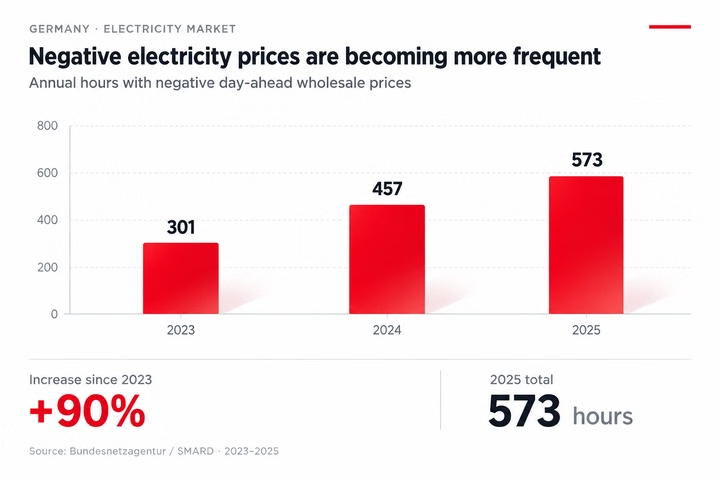
Germany recorded 301 hours of negative day-ahead electricity prices in 2023. That figure rose to 457 hours in 2024 and reached 573 hours in 2025, according to the Federal Network Agency.
The Netherlands experienced a similar development. Negative-price hours increased from 70 in 2021 to 581 in 2025, according to the Netherlands Enterprise Agency (RVO).
Negative electricity prices occur when supply exceeds what the market can absorb at that moment. This often happens during periods of strong renewable generation and relatively low demand. In such situations, the wholesale price can fall below zero. A producer exposed to that price may have to pay to sell electricity.
Solar installations in the same region tend to generate most of their electricity during the same daylight hours. When more solar power enters the market at once, wholesale prices often fall, cutting operators’ potential revenue. The effect is already measurable. According to a 2026 analysis by the German Energy Agency (dena), 24.1% of Germany's solar electricity generation in 2025 occurred during periods of negative wholesale prices, compared with 8.4% in 2023. In May and June 2025, the share reached approximately 43–47%.
This does not mean that all this electricity was sold at negative prices or that every solar operator suffered a financial loss. Revenues depend on the applicable support scheme, power purchase agreement and market arrangements. Nevertheless, the figures show that a growing share of solar production coincides with periods of low market value.
Low prices during sunny hours can also coexist with expensive electricity later in the day. Germany's average day-ahead wholesale price increased from €78.51/MWh in 2024 to €89.32/MWh in 2025, despite the higher number of negative-price hours.
A second development is the increasing curtailment of renewable generation. Curtailment means that a solar or wind installation deliberately reduces its output. Grid operators may require this to prevent network congestion or maintain system stability. Operators may also choose to reduce generation when negative prices make electricity exports uneconomic.
In the Netherlands, RVO reported that an estimated several percent of potential solar generation was lost through temporary shutdowns in 2025. The agency also noted that commercial solar installations increasingly reduce output during negative-price periods to avoid financial losses.
Cyprus provides an example of more extensive curtailment. According to the IEA Photovoltaic Power Systems Programme, the country curtailed 29% of renewable electricity generation in 2024, compared with 3.3% in 2022. Limited grid capacity and the rapid expansion of solar installations contributed to the increase.
Spain has experienced curtailment as well, although its annual rate remained below 1% in 2024, according to the same IEA PVPS report. This illustrates how strongly the problem depends on local grid conditions and the flexibility available within each electricity system.
Negative prices are a market signal. Curtailment means that electricity which could otherwise have been generated is not produced. Both developments follow a period of substantial renewable expansion. Solar and wind can now supply large amounts of electricity at low operating cost. Electricity systems, however, cannot always absorb that output at the moment it becomes available.
Greater storage capacity can help reduce this mismatch. Batteries can charge when electricity is abundant and discharge when demand rises. Stronger grids and more flexible electricity consumption are also necessary, particularly where local network congestion limits renewable generation.
Electricity price fluctuations increase the value of battery storage
For businesses, the consequences of these market developments depend on when they generate and consume electricity.
A factory with rooftop solar may produce surplus electricity during the middle of the day. Its electricity demand can remain high after solar generation declines, particularly if production continues into the evening. Without storage, the business exports its surplus electricity and purchases power later when it needs it. The price received for exported electricity may be substantially lower than the cost of electricity purchased from the grid.
A battery can store part of the midday surplus and supply it later. This increases the proportion of solar electricity consumed on site and can reduce grid purchases. Storage can also help manage peak demand. If a business operates several large electrical loads simultaneously, a battery can supply part of the required power and reduce the maximum demand placed on the grid. This can lower electricity costs where the tariff includes demand-based charges. The value of storage therefore depends on the site's consumption pattern and electricity contract. These developments have increased the commercial relevance of storage alongside continued investment in renewable generation.
LONGi expands its solar business through energy storage
LONGi has concentrated on manufacturing premium photovoltaic technology for many years. Its research and development have focused on increasing module efficiency and improving electricity generation under different operating conditions. Back contact technology remains central to that work.
Solar technology will continue to improve, and Europe will need additional renewable generation as electricity demand grows. But more efficient modules cannot determine when electricity is consumed. For customers, this creates requirements that extend beyond the performance of individual solar modules. They need systems that can store surplus electricity, control energy flows and maintain reliable operation over many years.
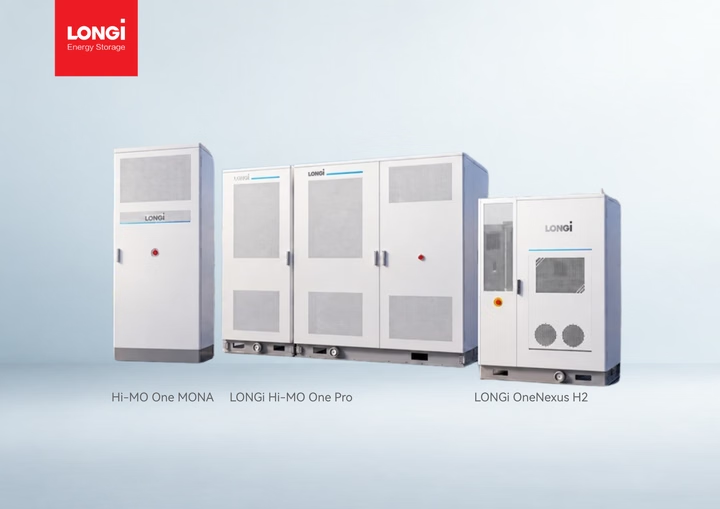
LONGi expanded into battery storage through its acquisition of PotisEdge, which was completed in March 2026. PotisEdge brought established battery storage technologies and engineering expertise into the company. The resulting LONGi ONE portfolio follows three principles: integration, safety and performance.
Integration concerns the interaction between solar generation, battery storage and energy management. LONGi develops key storage control technologies in-house, including the battery management system, power conversion system and energy management system. This allows the interfaces between these systems to be considered within the same engineering organization.
Safety is particularly important because battery storage systems operate with substantial amounts of electrical energy over long periods. LONGi's TÜV Rheinland-certified Intelligent Cell Contact System (iCCS) monitors battery cells individually. Its predictive safety functions can identify potential risks up to three to six months in advance. The system also monitors electrolyte leakage and safety valve conditions, with early warnings three to five minutes before a potential thermal runaway event. These capabilities support earlier intervention and form part of LONGi's integrated battery safety architecture.
Performance also depends on how well the individual components work together. LONGi develops its core battery management, power conversion and energy management technologies in-house, allowing them to exchange data and coordinate their operation within one system. This supports more precise control of charging and discharging, higher solar self-consumption and effective peak shaving. For larger storage projects, the same coordination allows the system to respond to changing electricity market conditions.
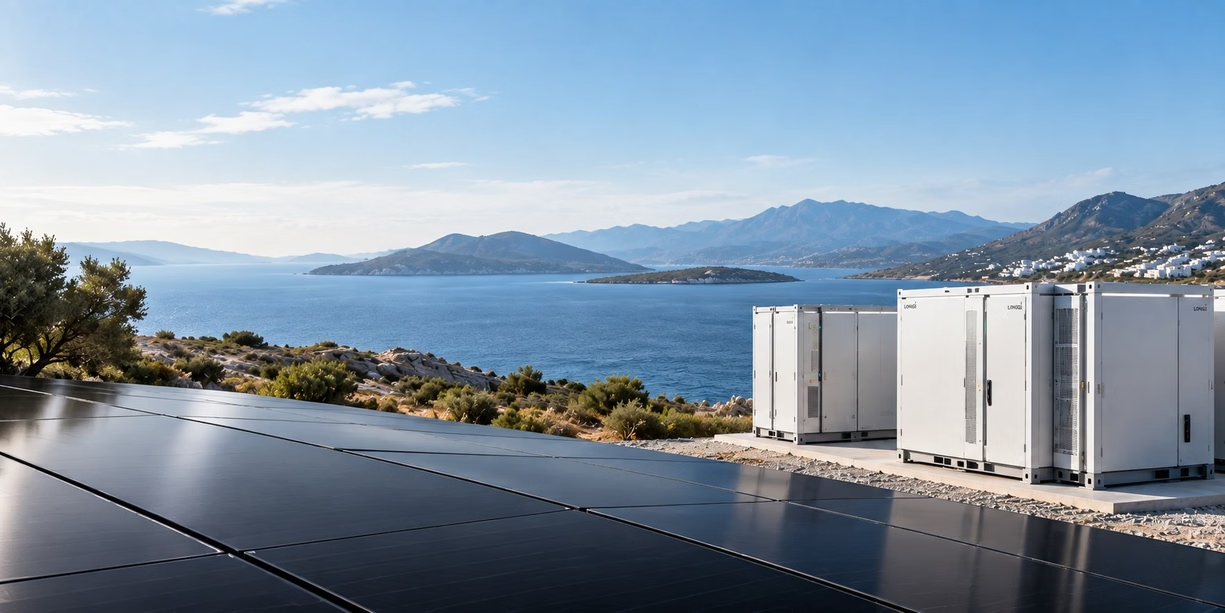
LONGi’s bess portfolio includes storage systems for commercial and industrial facilities, microgrids and utility-scale applications. The technical configuration depends on the project's electricity demand, operating requirements and connection to the grid.
Battery retrofits can increase the value of existing commercial solar installations
Many European businesses installed photovoltaic systems before battery storage became a practical option. Those installations continue to generate electricity, but the market conditions under which they operate may have changed considerably.
A solar system commissioned several years ago may have been designed primarily to reduce daytime electricity purchases. Today, the same business may face lower revenues for exported solar electricity or higher electricity demand outside daylight hours. Retrofitting battery storage allows the business to reconsider how it uses its existing generation capacity.
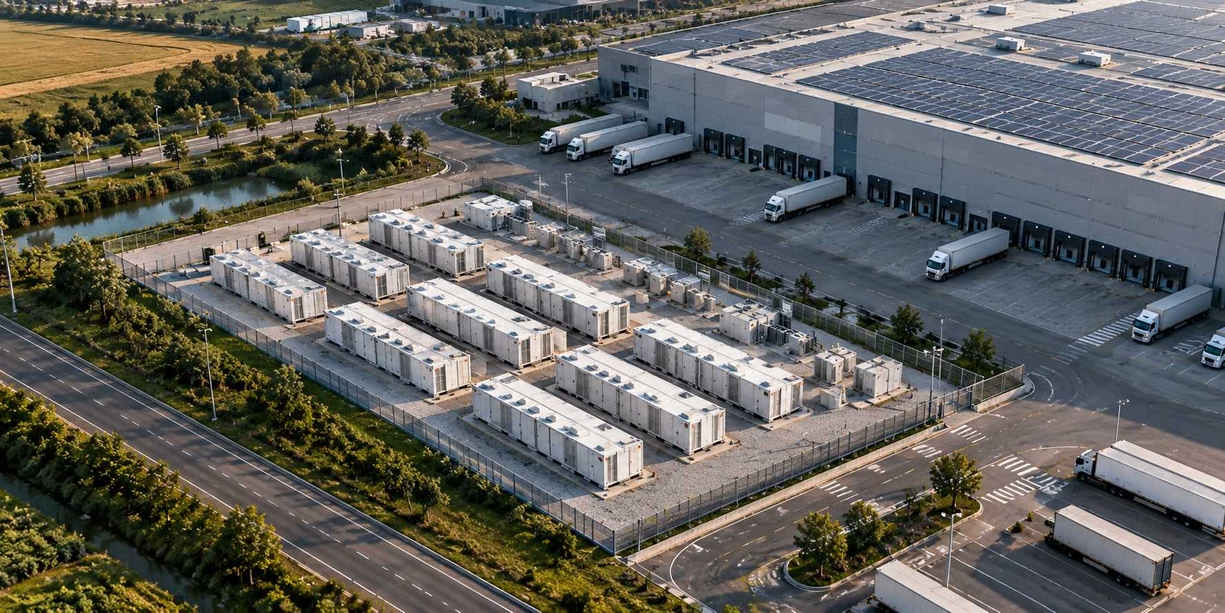
A logistics warehouse with rooftop solar panels may generate more electricity than it consumes on sunny afternoons, with the surplus exported to the grid. Later, as warehouse operations continue and solar generation falls, the business buys electricity.
With a battery, the business can store some midday surplus and use it later. The warehouse may also use the battery to reduce short periods of high grid demand, particularly if electric vehicle charging or other large loads operate simultaneously.
The success of Phase 5 depends on making better use of renewable electricity
Europe and many countries beyond have made substantial progress through the first four phases of renewable energy integration. Solar and wind now supply a significant share of electricity demand, and in some markets their generation already exceeds demand during certain hours. Success in Phase 5 will depend on how effectively we can store, manage and use this electricity. The more renewable power we can put to use instead of curtailing it, the greater the value of the generation capacity we have already built.
LONGi's expansion into battery storage builds on this development. Its acquisition of PotisEdge brought storage technology and systems integration expertise to the company’s established photovoltaic business.
For companies with existing solar installations, battery storage deserves a fresh economic assessment. In suitable applications, a retrofit can increase self-consumption, reduce peak demand and improve the return on an investment already made.
Learn more about the LONGi ONE Bess portfolio

Lorem ipsum dolor sit amet, consectetur adipiscing elit. Suspendisse varius enim in eros elementum tristique. Duis cursus, mi quis viverra ornare, eros dolor interdum nulla, ut commodo diam libero vitae erat. Aenean faucibus nibh et justo cursus id rutrum lorem imperdiet. Nunc ut sem vitae risus tristique posuere.