Subscribe to the LONGi Newsletter

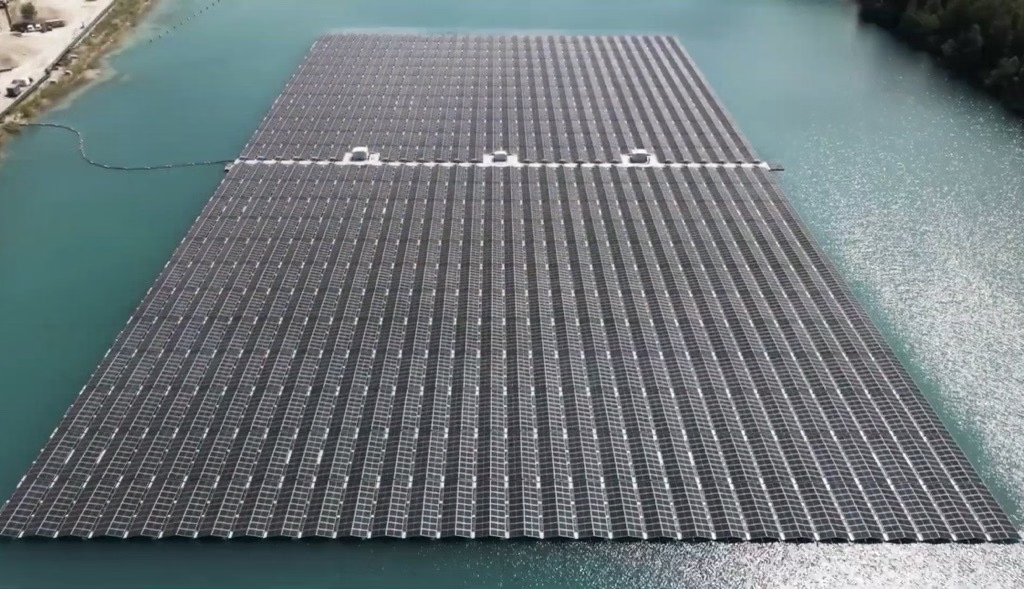
The 7.482 MWp floating solar installation on the Waldmattensee near Lahr uses 12,900 LONGi modules to generate renewable electricity for the VOGEL-BAU Group, with an estimated annual output equivalent to the consumption of approximately 2,800 households. Built by EPC contractor M/R Energiesysteme, the project was Germany's third-largest floating PV plant at the time of its completion in August 2025.
Floating solar brings renewable electricity to an active gravel extraction lake
The Waldmattensee in Kippenheimweiler, Baden-Württemberg, is an active gravel extraction lake operated by the VOGEL-BAU Group. In 2025, the company completed one of Germany's largest floating photovoltaic installations on the lake, adding renewable electricity generation to a site that continues to serve its original industrial purpose.
The solar installation covers approximately 39,000 m², equivalent to around 15% of the lake's surface. Most of the waterbody remains uncovered, and gravel extraction continues alongside the photovoltaic installation.
The project was developed to support VOGEL-BAU's growing electricity requirements. Founded in 1927 as a road construction company, the family-owned group has expanded into several areas of the construction and building materials industry. Its gravel extraction and production facilities require substantial amounts of electricity, making local renewable generation particularly relevant.
The floating PV plant is intended to supply nearby production facilities and support the company's plans to electrify its commercial vehicle and machinery fleet. VOGEL-BAU also plans to feed surplus electricity into the public grid.
M/R Energiesysteme installs nearly 7.5 MWp of floating solar capacity
EPC contractor M/R Energiesysteme planned and constructed the installation using 12,900 LONGi back contact photovoltaic modules, each rated at 580 W. The modules provide a combined DC capacity of 7.482 MWp and are mounted on 720 floating platforms supplied by ZIMMERMANN PV-Steel Group. The completed array measures approximately 153 m by 256 m.
Anchoring presented a particular engineering requirement because the installation operates on an active extraction lake.
The floating structure is secured by 32 specialist anchors installed in the lakebed using GPS-guided positioning. This arrangement holds the array in place while accommodating movement caused by changing water levels and environmental conditions. The project team assembled the floating platforms at the lakeside before launching them onto the water. Construction reached its first visible milestone on 20 January 2025, when representatives of VOGEL-BAU, the project partners and the City of Lahr attended the launch of the first platform.
The main assembly work took approximately ten weeks, and M/R Energiesysteme announced the completion of the installation on 28 August 2025.
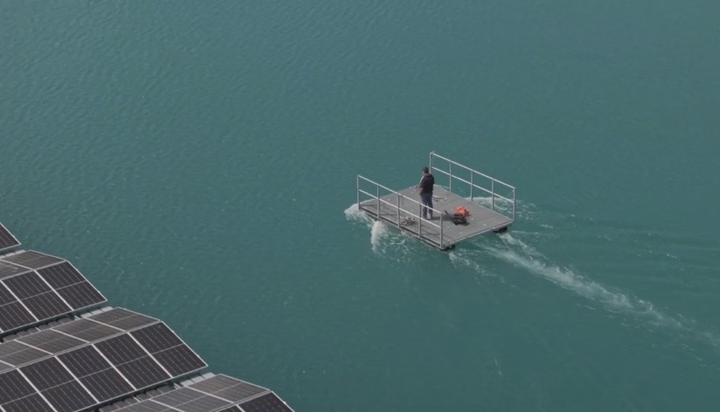
Industrial electricity generation without additional land use
The Waldmattensee installation provides VOGEL-BAU with a substantial source of renewable electricity close to its existing operations. Its estimated generating capacity corresponds to the annual electricity consumption of approximately 2,800 households, although the electricity is primarily intended for industrial use.
The project also required consideration of the lake's existing activities and environmental conditions. The City of Lahr approved the relevant development plan in October 2024 following a planning process that included an environmental report and a species protection assessment.
Floating PV is particularly relevant for industrial sites with access to suitable artificial lakes. At Kippenheimweiler, the company can generate solar electricity on a water surface already associated with its operations, without occupying additional land that could otherwise be used for industrial or agricultural purposes.

Lorem ipsum dolor sit amet, consectetur adipiscing elit. Suspendisse varius enim in eros elementum tristique. Duis cursus, mi quis viverra ornare, eros dolor interdum nulla, ut commodo diam libero vitae erat. Aenean faucibus nibh et justo cursus id rutrum lorem imperdiet. Nunc ut sem vitae risus tristique posuere.