Subscribe to the LONGi Newsletter

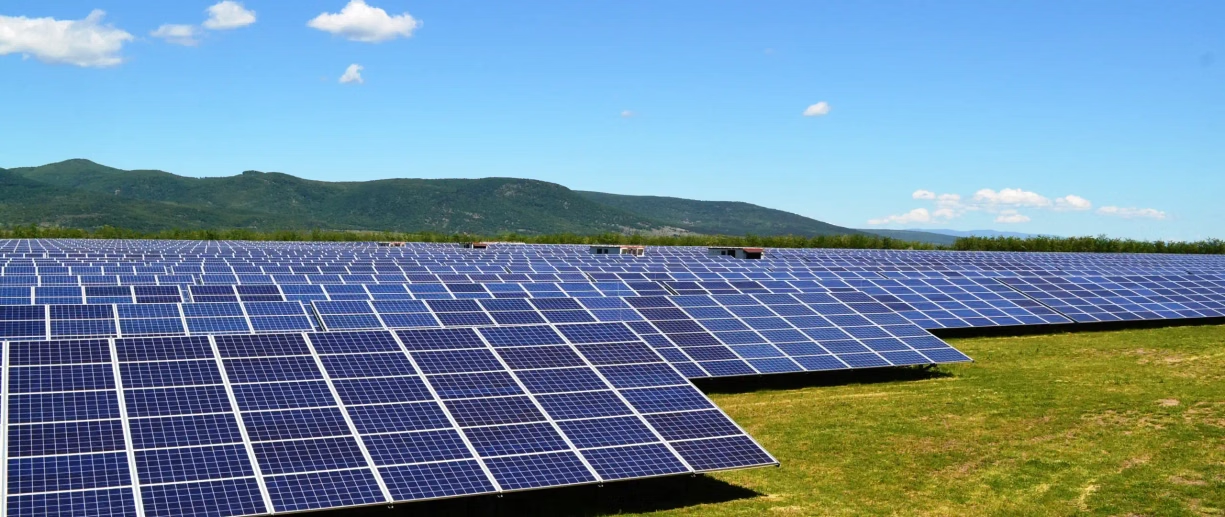
Dust accumulation remains a significant source of lost electricity generation for photovoltaic installations worldwide. According to the International Energy Agency's Photovoltaic Power Systems Programme (IEA PVPS), soiling accounts for an estimated 4–7% of global PV energy losses. For solar operators, dirt on module surfaces can reduce electricity output and increase cleaning costs. It also makes long-term energy yields less predictable.
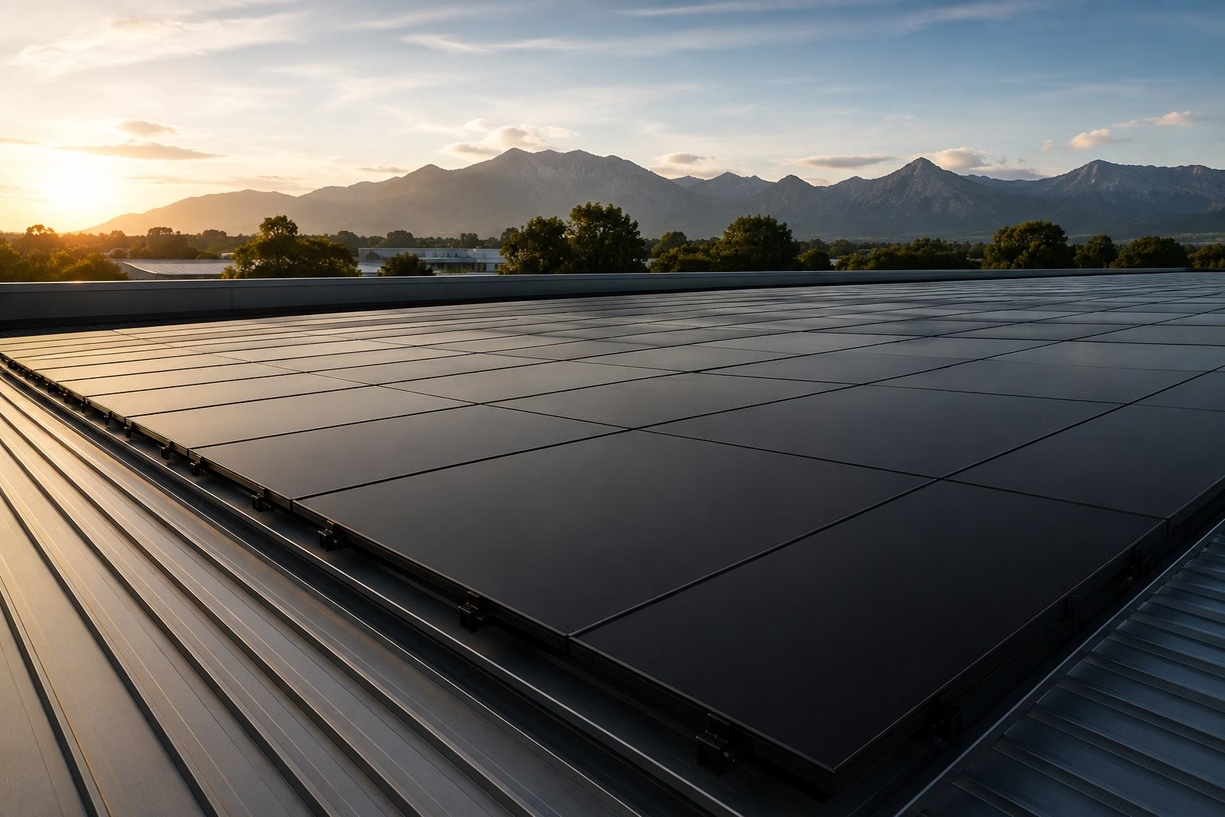
The problem is particularly relevant for commercial and industrial rooftops, where shallow installation angles and local environmental conditions can lead to persistent deposits. Even regular rainfall does not always keep solar modules clean. Research shows that conventional module frames can retain water and dirt along their lower edges, creating soiling bands that obstruct sunlight and affect electricity production.
Solar soiling causes substantial energy losses worldwide
Throughout the year, airborne dust settles on solar panels and gradually forms a layer of dirt on the glass. Pollen and pollution can make the problem worse, particularly in agricultural or industrial areas. The extent of the build-up varies with local weather conditions and the angle at which the modules are installed. Regular cleaning can help keep deposits under control.
Europe is also affected by dust transported over long distances. A study published in Renewable Energy in January 2026 examined Saharan dust events in Portugal, Spain, France, Italy and Greece between 2019 and 2023. Researchers found that photovoltaic output fell by an average of 25–40% during high-dust conditions, with reductions above 50% during extreme events.
These figures require an important distinction. Saharan dust can reduce electricity generation before particles even reach a solar module. Dust suspended in the atmosphere limits incoming sunlight and can contribute to cloud formation. Deposits on the glass create a separate problem because they continue to obstruct sunlight after the atmospheric event has passed. For PV operators, dust that remains on the glass after a storm can become a longer-term maintenance problem.
Low-tilt installations are vulnerable to dirt accumulation along module edges
The angle of a solar module influences the movement of rainwater across its surface. On steeply inclined modules, water can carry loose particles towards the lower edge. At shallow angles, runoff is less effective and dirt is more likely to remain on the glass. Conventional aluminium frames can contribute to this problem. Their lower edges often extend above the glass surface and prevent water from draining completely. As trapped water evaporates, it leaves particles behind. Repeated exposure to rain and airborne dust can gradually create a concentrated band of dirt across the bottom of the module.
A study published in Frontiers in Energy Research in 2021 investigated these soiling bands on commercial and industrial rooftop installations in China. Researchers found persistent dirt deposits even in Guangzhou, which receives around 1,800 millimetres of rainfall annually, more than twice the amount recorded in Hamburg. Despite frequent rainfall, dirt continued to accumulate along the lower edges of the modules. Soiling bands also appeared throughout the year in Xi'an, including during the rainy summer months.
The same study examined a solar installation in Kaifeng between June and October 2019. Researchers found that dirt accumulation along the lower edges of the modules was associated with an average 4.7% difference in maximum electrical current compared with the clean reference system. This shows that persistent dirt deposits affects solar panel performance.
The findings are also relevant for commercial rooftops in Europe, where solar panels are often installed at low angles. Dust can be a particular problem on buildings near farmland or busy industrial areas.
Solar panel cleaning adds to operating costs and water consumption
Cleaning becomes worthwhile when the value of the electricity recovered exceeds the cost of the work. The appropriate frequency varies widely by location. A rooftop near agricultural fields may experience different conditions than an installation in a coastal or urban environment.
Cleaning large rooftop solar installations can be expensive, particularly when access is difficult. Operators need to weigh these costs against the value of the electricity they could recover. Cleaning also requires substantial amounts of water. In 2022, researchers at the Massachusetts Institute of Technology (MIT) estimated that around 38 billion litres of water were used worldwide each year to clean solar panels. According to MIT, that is enough to meet the drinking water needs of up to two million people.
The solar industry is exploring alternatives, including robotic cleaning systems and technologies that remove dust without water. Another approach starts with the solar module itself. Changes to the frame design can help prevent dirt and water from collecting along the edges, allowing rain to wash away more of the dust naturally.
An Anti-Dust frame design reduces water and dirt retention
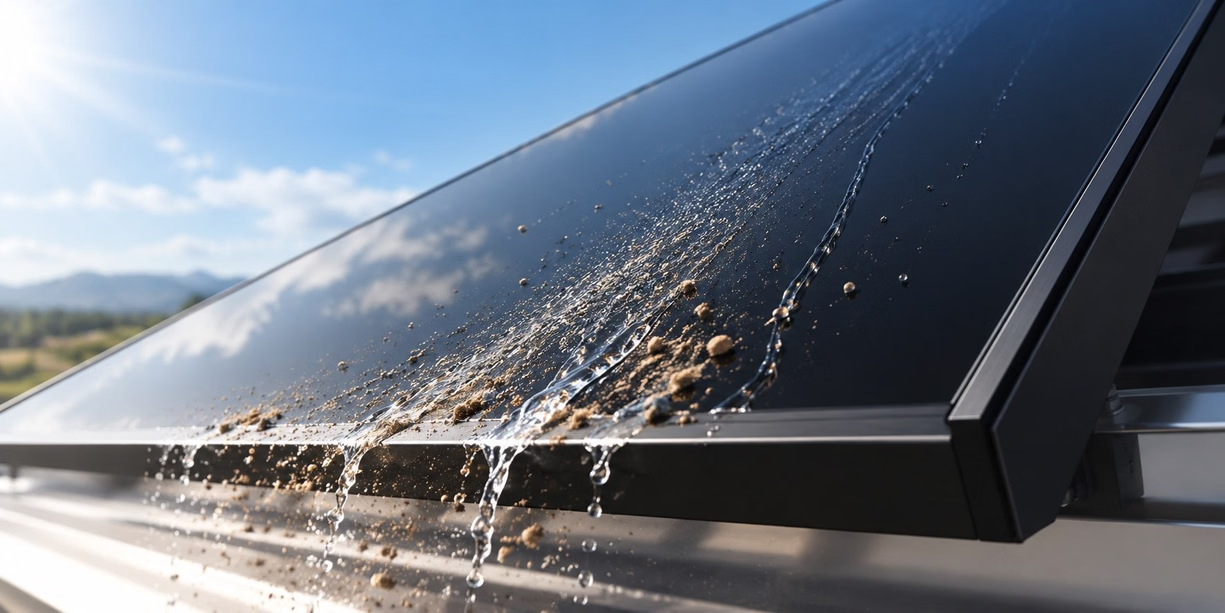
One way to reduce persistent dirt deposits is to change the shape of the solar module's frame. Conventional frames often have a raised edge that traps rainwater and dust at the bottom of the glass. An Anti-Dust frame removes this barrier through a shorter lower edge that sits flush with the glass surface. Rainwater can flow off more easily and carry loose dirt with it.
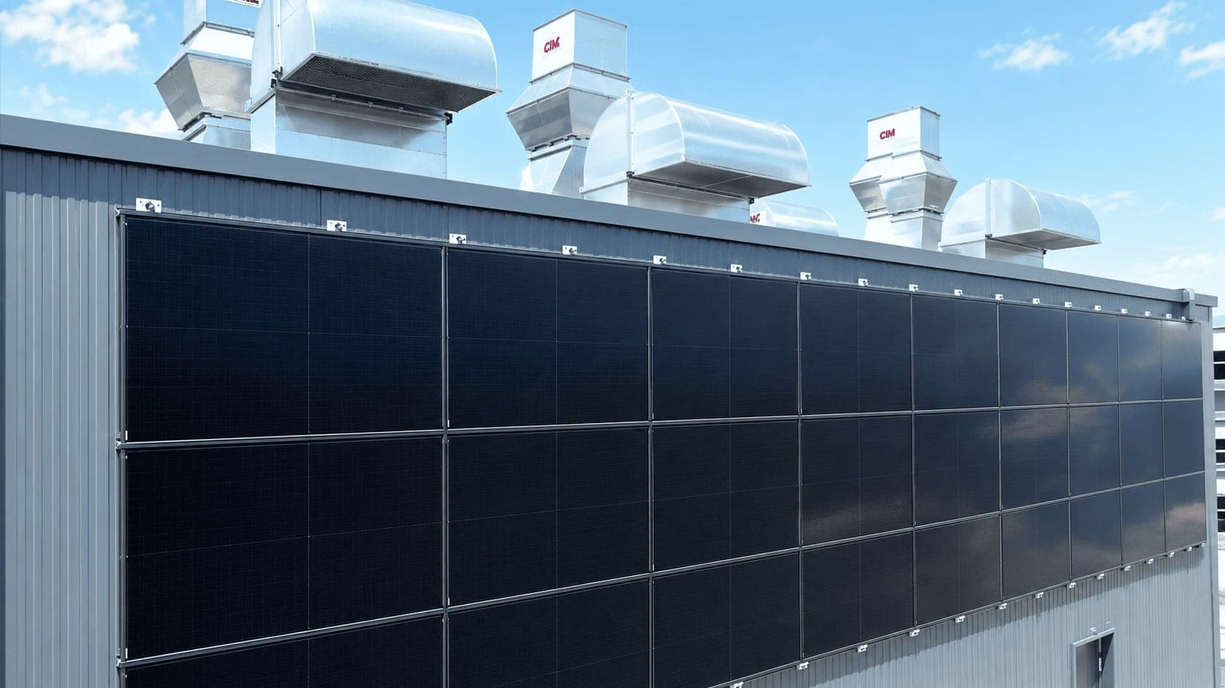
This type of frame is used in LONGi's Guardian Anti-Dust modules. The design is particularly useful for low-tilt installations, where water drains more slowly and dirt is more likely to accumulate. The modules can still be installed with standard mounting clamps.
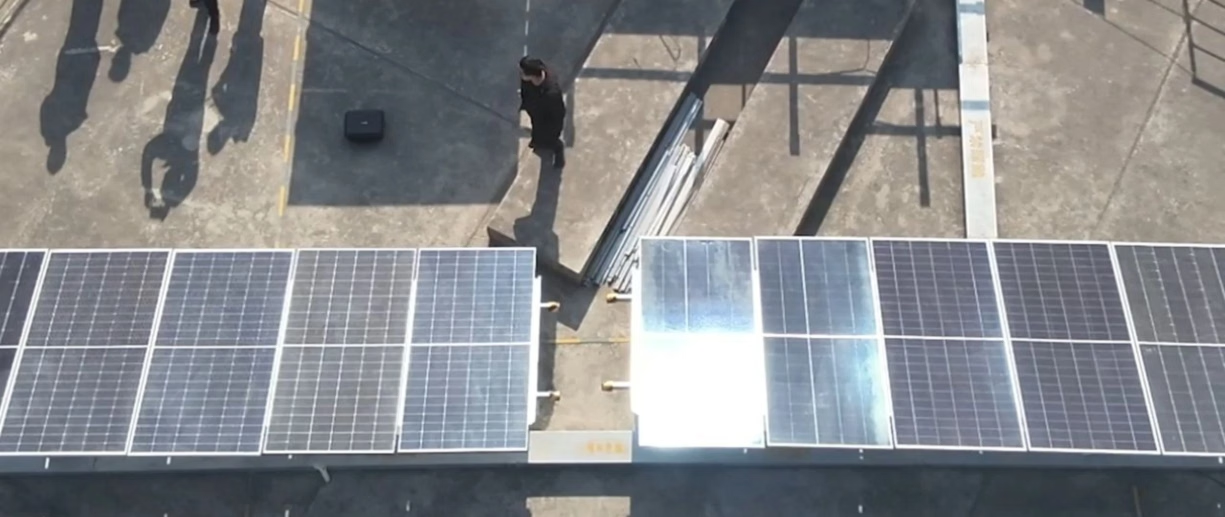
The same frame design also has an Anti-Snow effect. On conventional modules, the raised lower frame edge can hold back snow as it begins to melt and slide down the glass. The flush lower edge of LONGi's Anti-Dust modules removes this obstacle and supports natural snow shedding. This can help expose the module surface sooner after snowfall, although the effect depends on the roof angle and weather conditions.
Two comparative video demonstration illustrate this effect on different solar module designs, including TOPCon technology. It features LONGi's earlier Hi-MO X6 Anti-Dust module, whose frame design is now also available in the Hi-MO X10 Guardian Anti-Dust series.
LONGi combines Anti-Dust frame design with high-performance back contact and Shading Optimizer technology
The Hi-MO X10 Guardian Anti-Dust combines LONGi's Anti-Dust frame design with HPBC 2.0 back contact technology to help maintain energy production even when dirt or partial shading affects the module. The frame reduces the build-up of dust along the lower edge, and the cell technology helps limit power losses when parts of the module receive less sunlight. The series delivers up to 670 W of power and module efficiency of up to 24.8%.
At the heart of the module is LONGi's second-generation back contact technology. HPBC 2.0 places all electrical contacts on the rear of the solar cells, leaving the front free of the metal contact lines found on conventional modules. This allows more sunlight to reach the active cell surface. LONGi's TaiRay silicon wafers provide additional mechanical strength, while zero-busbar (0BB) technology shortens the electrical transmission path and reduces power losses.
HPBC 2.0 also helps the module maintain its output when individual cells receive less sunlight. Even a small area of persistent dirt can shade part of a cell and affect the performance of a larger section of the module. LONGi's integrated Shading Optimizer limits these losses through a cell-level design that allows current to flow around affected areas without immediately activating the module's bypass diodes. This helps maintain electricity generation and reduces the risk of excessive heat in shaded cells.
In comparative testing by China's National Center of Supervision and Inspection on Solar Photovoltaic Product Quality (CPVT), a Hi-MO X10 module lost an average of 10.15% of its power when half of one cell was shaded. The tested TOPCon modules lost 36.48% under the same conditions. The Hi-MO X10 therefore recorded approximately 72% lower power loss in this test.
The combination of all features helps preserve the energy yield that the installation is designed to deliver.
The financial cost of dust on commercial solar rooftops
For commercial solar installations, even relatively small losses in electricity production can have a financial impact over time. A 1 MWp rooftop system with an assumed annual yield of 1,000 MWh, for example, would lose 30 MWh if soiling reduced its output by 3%. At an electricity value of €0.15 per kWh, this would amount to €4,500 in lost electricity value each year.
Operators can recover some of that electricity through cleaning, but the work comes at a cost. Access to large commercial rooftops can make it particularly expensive. Soiling therefore affects project economics in two ways: through lost production and the expense of keeping modules clean. Both influence the levelised cost of electricity (LCOE) over the lifetime of an installation.
This also shows the growing importance of specialised solar modules that respond to specific environmental and operating conditions. LONGi's Hi-MO X10 Guardian Anti-Dust is one such example, as its frame helps rainwater wash away dirt and its back contact technology limits power losses caused by partial shading.
More information about the technology and its technical specifications is available on the LONGi Anti-Dust page.

Lorem ipsum dolor sit amet, consectetur adipiscing elit. Suspendisse varius enim in eros elementum tristique. Duis cursus, mi quis viverra ornare, eros dolor interdum nulla, ut commodo diam libero vitae erat. Aenean faucibus nibh et justo cursus id rutrum lorem imperdiet. Nunc ut sem vitae risus tristique posuere.