Subscribe to the LONGi Newsletter

A solar array earns less than it could when generation and demand fall out of step, and the grid caps what a site can export. Storage lets a site keep the value that timing would otherwise strand.
A commercial or industrial site that installs solar usually does its sizing around one number, the annual kilowatt-hours the array can produce. That number is real, but it hides four separate places where the value leaks out before it reaches the balance sheet. Generation peaks at midday while the site's own demand and the day's highest prices sit elsewhere. The grid connection sets a ceiling that has nothing to do with how much sun the roof sees. And a plant built only to generate cannot move what it makes to a better hour or hold it for when the site needs it. LONGi, which builds both the solar modules and the storage that pairs with them, groups these leaks into four mismatches, and each one is a reason a solar-plus-storage system earns more than the panels alone.
Solar output rarely lines up with the hours electricity is worth most
Midday is when a fixed-tilt array produces hardest and when wholesale and time-of-use prices are often at their lowest. A factory's own demand tends to climb in the morning and again in the late afternoon, so the site exports cheap midday power and buys expensive power back a few hours later. These are the price mismatch and the load mismatch, and together they mean a solar-only site sells low and buys high on the same day. Storage breaks that pattern by holding midday generation and releasing it into the evening peak, so the energy is used or sold when it carries the most value instead of when it happens to be produced.
A grid connection caps a site long before the roof or field runs out of sun
The next constraint has nothing to do with sunlight. A site's grid connection fixes how much power it can import and export, and across much of Europe that connection is now the hardest part of a project to enlarge. A developer who wants to add more PV, or a factory adding an electrified process, can find that the meter is the limit rather than the land. Storage eases this capacity mismatch because it lets a site shape its own profile behind the connection point, charging when there is spare headroom and discharging to stay under the export or demand ceiling. The array can grow without the grid application having to grow with it.
A generation-only project answers half the question it was built to solve
The fourth gap is structural. A PV-only installation can lower a site's energy cost while the sun shines, but it cannot do anything about the hours it does not, and it cannot keep a critical load running when the grid drops. That is the project mismatch, the distance between what a generation asset does and what a site actually needs across a full day. The fix is to treat generation and storage as one project from the design stage instead of bolting a battery on afterward.
Storage turns four separate constraints into one system decision
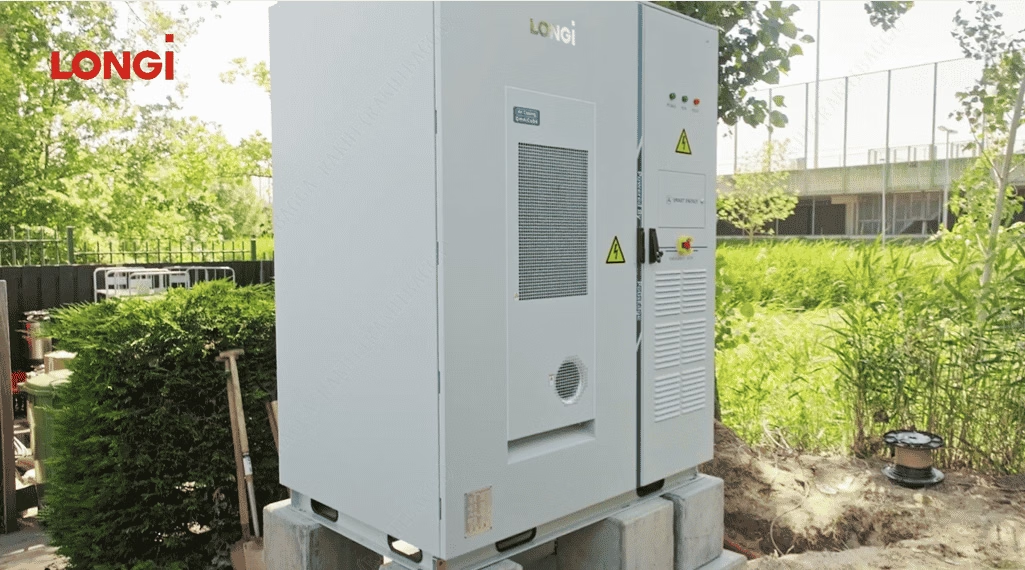
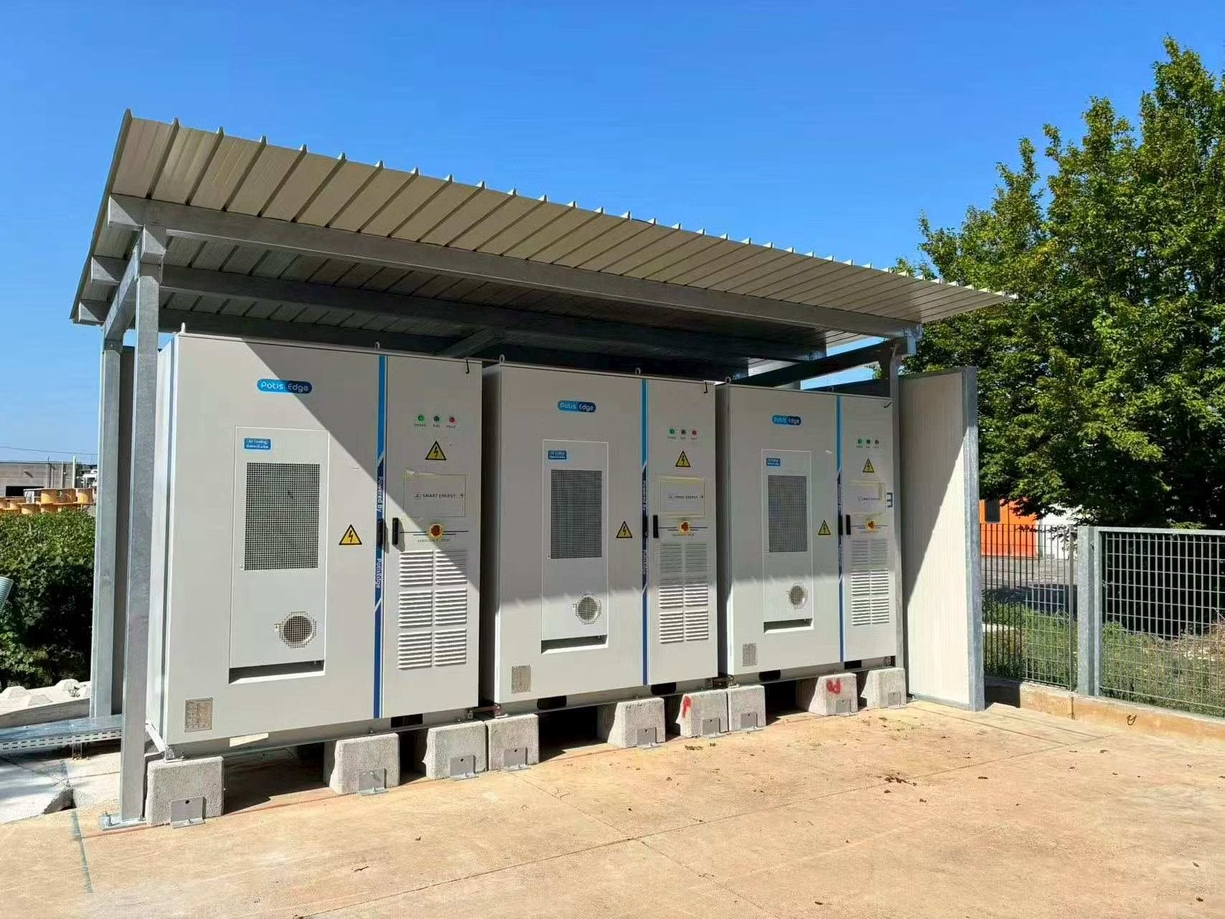
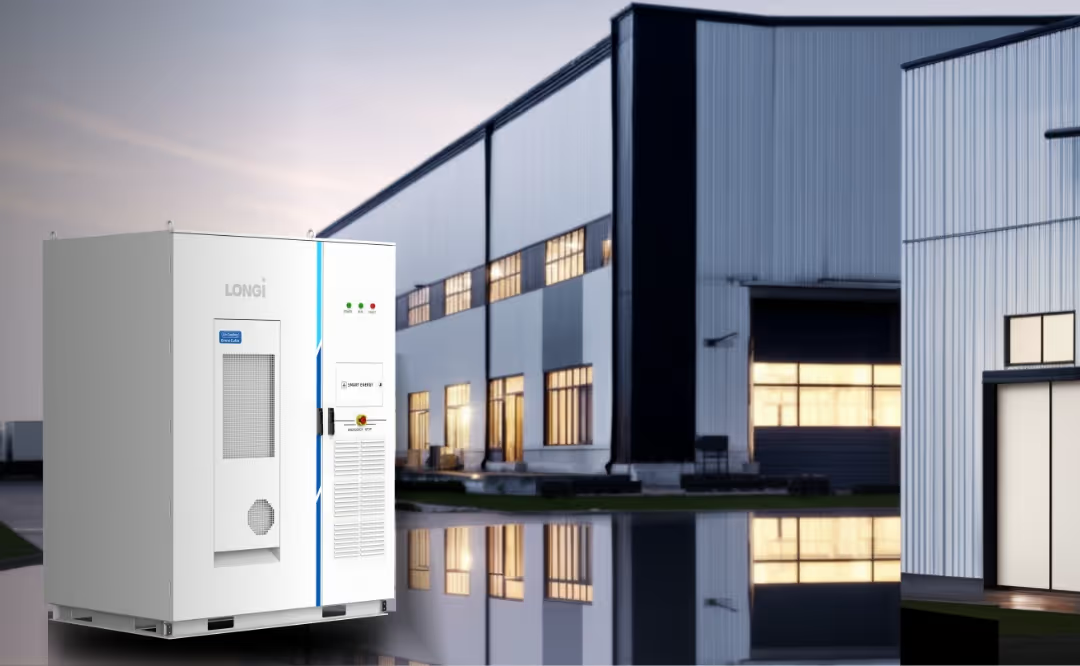
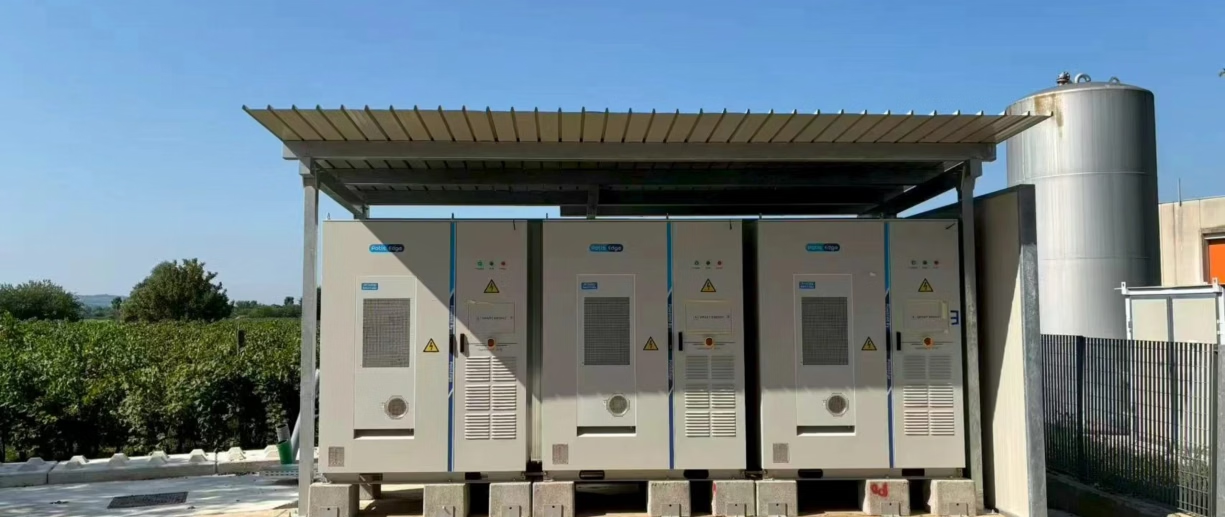
On its own, each mismatch looks like a different problem for a different specialist. Together they point to the same answer, which is to design generation and storage as a single system with one set of controls. LONGi builds toward that with a DC-coupled architecture, where the PV array charges the battery directly on the DC side instead of converting to AC and back first. The direct path avoids a conversion loss of up to about 5 percent, and it matters most on exactly the midday solar energy a site is trying to store rather than sell cheaply. The same logic runs through how the system is bought. Under its ONE approach, LONGi supplies generation and storage as one package, dispatched by a single platform, so the four mismatches sit with one accountable partner instead of being split across several vendors.
What this decides is whether the value shows up or leaks away
A site can treat storage as an accessory to bolt on later, or it can size generation and storage together from the start. That one choice determines whether the midday output a solar-only site would have exported at the day's lowest price gets spent during the evening peak instead, and whether a grid connection that would have capped expansion stops being the reason a project stalls. The backup that keeps a critical load running through an outage follows from the same decision. None of it comes from the panels. It comes from treating generation and storage as one system at the design stage, which is the practical difference between a solar project that underdelivers and one that earns what the sun makes available.

Lorem ipsum dolor sit amet, consectetur adipiscing elit. Suspendisse varius enim in eros elementum tristique. Duis cursus, mi quis viverra ornare, eros dolor interdum nulla, ut commodo diam libero vitae erat. Aenean faucibus nibh et justo cursus id rutrum lorem imperdiet. Nunc ut sem vitae risus tristique posuere.