Subscribe to the LONGi Newsletter

A 349.44 kWp commercial solar project in central Thailand provides new performance data for LONGi HPBC 2.0 technology under tropical operating conditions. A simulation based on the project's operating conditions indicates a 3.3% higher average daily specific energy yield compared with conventional TOPCon modules in March. Recorded generation data from the installed BC modules also indicate that the system is performing in line with expectations.
Thailand project evaluates HPBC 2.0 performance in tropical climate
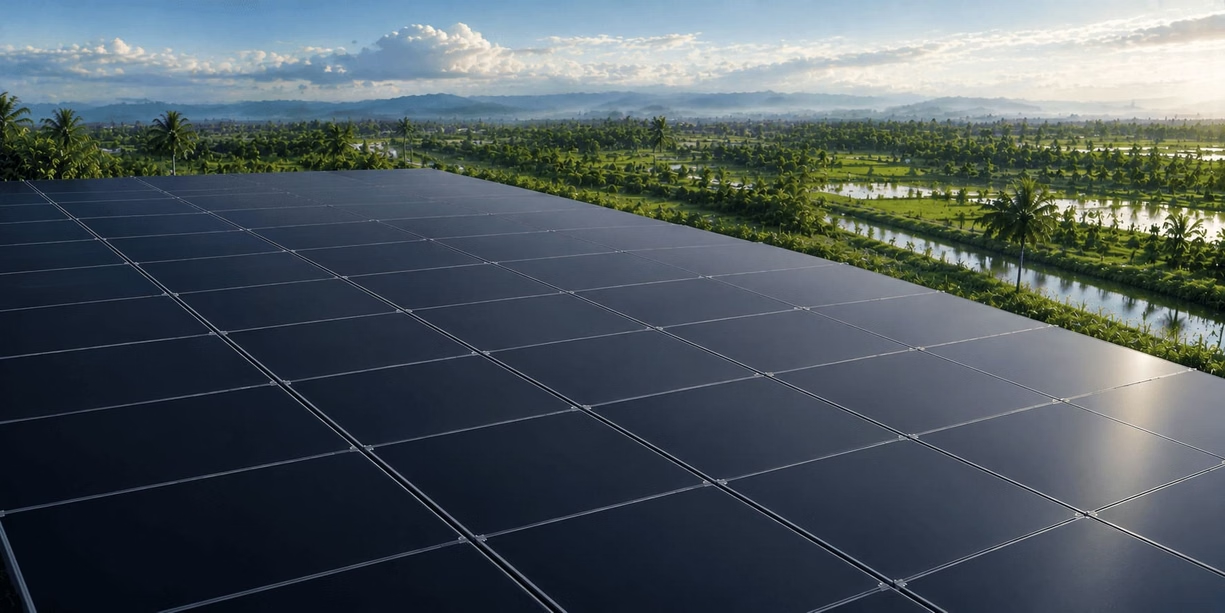
Located in Nakhon Pathom, central Thailand, approximately 50 km from Bangkok, the 349.44 kWp commercial solar installation uses 546 LONGi LR7-72HVD 640W modules. The area has a tropical climate characterised by high temperatures throughout the year and distinct wet and dry seasons.
Simulation results for March show that LONGi BC 2.0 achieved an average daily specific yield of 4.33 kWh/kWp, compared with 4.19 kWh/kWp for conventional TOPCon modules, representing an estimated gain of approximately 3.3%. The comparison uses project-specific operating conditions to estimate the difference in energy yield between HPBC 2.0 and conventional TOPCon technology. Recorded generation data also indicate that the installed HPBC 2.0 modules are performing in line with expectations.
The recorded generation data from the operating plant also show that the installed HPBC 2.0 modules are delivering the expected power generation performance.
How BC technology supports energy generation
LONGi HPBC 2.0 technology is built on a back-contact cell architecture, which places both electrical contacts on the rear side of the cell and removes conventional metal gridlines from the front surface. This design improves light utilisation and energy conversion efficiency by allowing more sunlight to reach the silicon layer.
LONGi HPBC 2.0 also incorporates cell design features that reduce electrical losses and support performance at elevated operating temperatures. The technology's power temperature coefficient helps limit output losses as module temperatures increase, an important consideration in Thailand's tropical climate, where high solar irradiance and ambient temperatures can lead to elevated module operating temperatures.
BC vs. TOPCon: Results across different environments
The Thailand project complements other LONGi field studies examining BC performance under different environmental conditions. In Sanya, China, HPBC 2.0 modules demonstrated up to 14.96% higher energy yield than TOPCon under shading, while a field test in Yinchuan recorded 1.51% yield advantage. Together, these studies provide further insights into BC performance across different operating environments.

Lorem ipsum dolor sit amet, consectetur adipiscing elit. Suspendisse varius enim in eros elementum tristique. Duis cursus, mi quis viverra ornare, eros dolor interdum nulla, ut commodo diam libero vitae erat. Aenean faucibus nibh et justo cursus id rutrum lorem imperdiet. Nunc ut sem vitae risus tristique posuere.