Suscríbase al boletín de LONGi

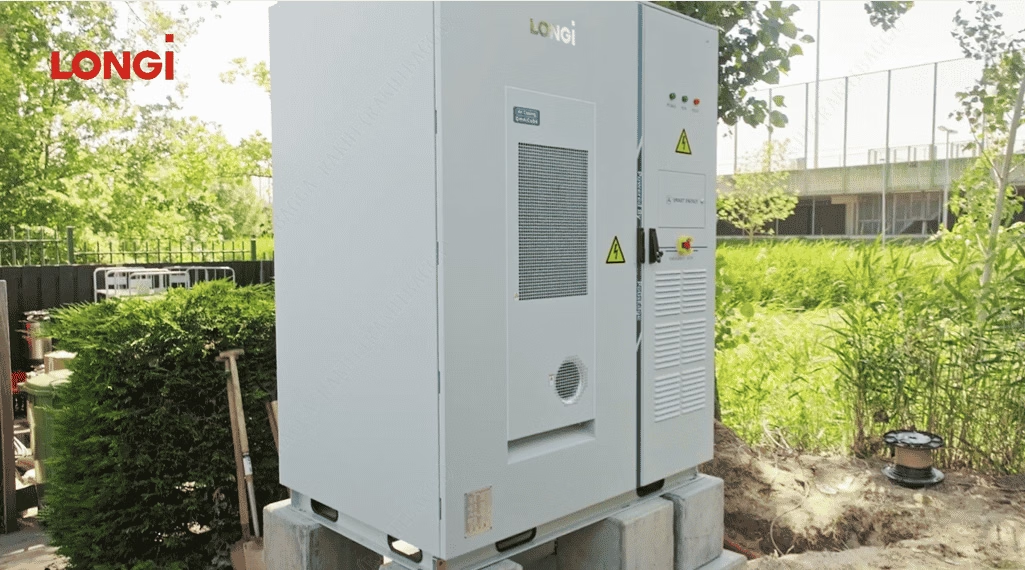
Con la puesta en marcha de su primer proyecto de almacenamiento de baterías para clientes comerciales e industriales (C&I) en los Países Bajos, LONGi ha puesto en funcionamiento su OmniCube A215 en un exigente entorno real de un sitio de carga de vehículos eléctricos de alto tráfico en Schiedam, en la región de Róterdam, al suroeste de los Países Bajos. El sistema mantiene el sitio funcionando de manera confiable durante sus períodos de carga más intensos sin añadir presión adicional a la red eléctrica.
El instalador, E-Wndr, supervisó la instalación del sitio que opera múltiples puntos de carga para vehículos eléctricos junto con una alta demanda eléctrica diaria. En los momentos de carga pico, la demanda total en el sitio se aproximaba, y ocasionalmente superaba, la capacidad de conexión contratada, exponiendo al negocio al riesgo de exceder su pico acordado. En lugar de esperar una costosa mejora de la conexión a la red, el operador desplegó un OmniCube A215 de 215 kWh / 105 kW, almacenando energía durante los períodos de menor demanda y liberándola durante los picos, aliviando la carga en la red.
Para LONGi, el proyecto representa un paso más desde fabricante de módulos solares hacia su visión LONGi One de energía solar más almacenamiento integrado, y una demostración de que las soluciones de almacenamiento de energía de LONGi como el OmniCube A215 pueden adaptarse a proyectos existentes con costos mínimos y disrupciones operativas.
Una red holandesa congestionada y la creciente demanda de vehículos eléctricos convierten el almacenamiento in situ en una necesidad práctica
Los Países Bajos cuentan con la red de carga pública más densa de Europa, con más de once puntos de carga por cada 1.000 habitantes, la tasa per cápita más alta del continente. Esta rápida adopción de vehículos eléctricos y de infraestructura de carga ha presionado a la ya congestionada red de los Países Bajos, convirtiendo la capacidad en un cuello de botella para una mayor expansión. La congestión de la red se ha convertido en uno de los desafíos centrales tanto para la seguridad energética como para la transición energética en general.
Las limitaciones de capacidad de la red son más prevalentes en el oeste densamente poblado del país, donde las colas de conexión son largas. Para los sitios que no pueden simplemente asegurar más capacidad de red, el almacenamiento *in situ* ofrece una alternativa funcional, desplazando el consumo fuera de las horas pico.
La política holandesa está cada vez más orientada a recompensar este tipo de flexibilidad. En 2025, el operador de transmisión TenneT avanzó hacia un despliegue a gran escala de contratos de derecho de transmisión dependiente del tiempo (TDTR), que otorgan a los usuarios flexibles, como los sistemas de baterías, acceso a capacidad fuera de hora a cambio de aceptar una limitación y pueden reducir las tarifas de red hasta en un 65 por ciento. Esto significa que los proyectos flexibles que pueden desplazar la demanda de los períodos pico se están volviendo centrales en la forma en que el sistema holandés gestiona la capacidad.
El OmniCube A215 combina almacenamiento, conversión y control en una unidad integrada
El OmniCube A215 es un sistema modular de almacenamiento C&I que ofrece 215 kWh de capacidad y 105 kW de potencia en una plataforma de fosfato de hierro y litio (LFP) más segura. Dado que la batería, el inversor y el sistema de gestión de energía están integrados en una sola carcasa, se conecta directamente a un suministro trifásico estándar de 400 V y puede añadirse a un sitio existente sin rediseñar su infraestructura eléctrica.
En su núcleo se encuentra el Sistema de Conexión de Celdas Inteligentes (iCCS) de LONGi, que reduce el cableado interno hasta en un 80 por ciento y permite monitorizar individualmente cada celda, de modo que las irregularidades térmicas se detectan a tiempo. La arquitectura está diseñada para escalar: hasta diez unidades pueden funcionar en paralelo, llevando un despliegue de alrededor de 100 kW al rango de megavatios a medida que crece la demanda. La protección integrada y un sistema de supresión de incendios a base de aerosol, junto con el cumplimiento de las normas internacionales IEC y UL, facilitan la obtención de permisos y la asegurabilidad a largo plazo.
Para un sitio de carga activo, el sistema debía integrarse en una operación en funcionamiento, gestionar de forma segura las cargas pico reales y dejar margen para expandirse a medida que la demanda de carga sigue aumentando.
Schiedam ofrece un plan repetible para sitios de vehículos eléctricos y C&I en todos los Países Bajos
Miles de sitios holandeses se enfrentan a una tensión similar entre la creciente demanda electrificada y una red limitada. El diseño modular del OmniCube A215 permite escalar o replicar el mismo enfoque, y el sistema es compatible con la energía solar in situ y otras fuentes de generación, dejando espacio para configuraciones de gestión de energía más completas en el futuro.

Lorem ipsum dolor sit amet, consectetur adipiscing elit. Suspendisse varius enim in eros elementum tristique. Duis cursus, mi quis viverra ornare, eros dolor interdum nulla, ut commodo diam libero vitae erat. Aenean faucibus nibh et justo cursus id rutrum lorem imperdiet. Nunc ut sem vitae risus tristique posuere.