Abonnieren Sie den LONGi Newsletter

Back contact technology allows solar modules to combine glare control with high efficiency, power density and long-term energy performance
For a company planning solar on a glare-sensitive site, reducing reflection is only one part of the investment decision. The system still has to generate enough electricity from the available area to make the project economically viable.
That creates an engineering challenge. Anti-glare glass changes how incoming light interacts with the module surface in order to prevent concentrated reflections. At the same time, every photovoltaic system depends on getting as much usable sunlight as possible to the solar cells and converting it efficiently into electricity.
The question for developers and EPCs is therefore not only whether a module controls glare. It is whether it can do so while maintaining the power, efficiency, and long-term energy generation required by the project.
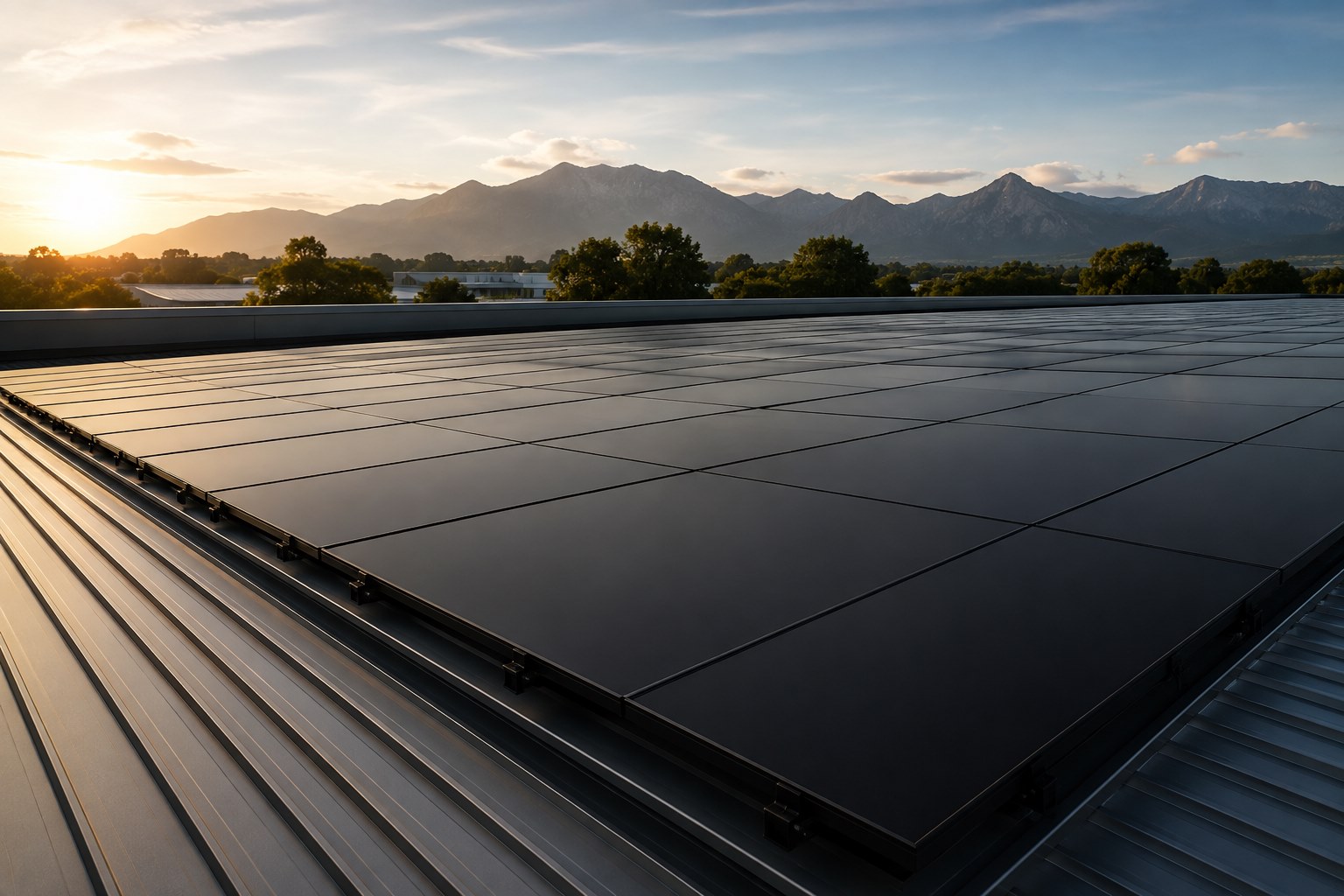
LONGi's Hi-MO X10 Guardian Anti-Glare combines a textured anti-glare glass surface with its proprietary HPBC 2.0 (Hybrid Passivated Back Contact) cell technology. The 72-cell Anti-Glare module measures 2,382 × 1,134 mm and reaches up to 665 W at 24.6% module efficiency.
These figures determine how much nominal PV capacity can be installed within the usable project area and therefore directly affect the system’s generation potential. The module is also bifacial, with a specified bifaciality of 70 ± 5%, allowing rear-side irradiance to contribute additional generation where site and installation conditions support it. Together, power density and bifacial generation potential provide measurable inputs for estimating how much electricity a system can produce from the available area.
Performance over time is equally relevant to the investment calculation. The 72-Anti-Glare standard version specifies less than 1% power degradation in the first year and 0.35% annually from years 2 to 30, with at least 88.85% of initial output warranted after 30 years. Its Pmax temperature coefficient of −0.260%/°C provides another defined input for modelling performance as module temperatures rise. These parameters can be incorporated directly into project yield simulations and lifetime generation forecasts, providing a quantitative basis for assessing the economics of an anti-glare system.
Back contact architecture removes front-side metallisation from the light-facing surface
Conventional crystalline silicon solar cells require metallic contacts to collect and transport the electrical current generated inside the cell. In conventional cell architectures, part of this metallisation is located on the front surface.
That creates a straightforward physical limitation: the area occupied by metal cannot simultaneously absorb incoming sunlight.
Back contact architecture changes this geometry. HPBC 2.0 places the positive and negative electrical contacts on the rear of the cell, leaving the front free of conventional metal grid lines.
This gives the cell a larger unobstructed surface for absorbing incoming light.
For an anti-glare module, that matters in particular. The front glass is already performing an additional optical function by dispersing reflected light. Increasing light utilisation at cell level helps maintain high conversion efficiency despite this specialised module surface.
For a commercial rooftop, efficiency is not an abstract laboratory number. A module with 24.6% efficiency converts more of the solar energy falling on the same module area into electricity than a module with lower efficiency under the same standard test conditions. That translates directly into power density.
Higher power density matters when usable roof area is limited
Commercial solar projects rarely have unlimited space. Roof dimensions, fire-safety corridors, ventilation equipment, skylights, structural restrictions and required setbacks all reduce the area that can actually accommodate modules. This makes module efficiency an economic parameter.
Consider two modules with the same physical dimensions but different efficiencies. The higher-efficiency module provides greater installed solar capacity from the same usable roof area. Conversely, reaching a fixed project capacity requires fewer square metres of module area.
The economic benefit can therefore be quantified. An EPC can calculate the usable roof area, determine how many modules fit within the system layout and multiply that number by each module’s rated power. This provides the installed DC capacity that can be achieved within the available area.
The relevant comparison for an anti-glare project is therefore not simply the price of one module against another. It is the installed capacity and expected energy generation that different module technologies can deliver from the same constrained site.
This is particularly important on glare-sensitive commercial roofs because the anti-glare requirement already restricts the range of modules available to the project. High module efficiency prevents that technical requirement from unnecessarily becoming a second constraint on the amount of PV capacity that can be installed.
LONGi’s HPBC 2.0 improves electrical transport as well as light utilisation
Removing front-side contacts is only one part of the HPBC 2.0 architecture.
LONGi's Zero-Busbar design also changes how current is collected inside the module. The ribbons connect directly with the cell fingers instead of using conventional busbars. This reduces the electrical transmission distance by 6.5% and contributes approximately 5 W of additional module power for a 2,382 × 1,134 mm module.
HPBC 2.0 also uses Bipolar Hybrid Passivation technology with an open-circuit voltage of 745 mV, an increase of 15 mV associated with this layer of the cell architecture which also contributes to higher conversion efficiency.
At the light-absorption level, LONGi's HPBC 2.0 platform uses a multilayer anti-reflection structure that increases short-circuit current by 2.25%, while improvements to the cell micro-texture reduce short-wave reflection by 12%.
These mechanisms are relevant because module efficiency is the combined result of several losses. Reducing optical losses, reducing electrical transport losses and increasing voltage each contributes to the amount of usable electrical power produced from the same module surface.
For a project owner, the value of these improvements is ultimately visible in module power, system capacity and energy yield rather than in the individual cell parameters themselves.
Energy yield depends on more than rated power
Rated power tells an EPC what a module produces under Standard Test Conditions. A solar plant, however, operates outside those conditions for almost its entire life.
Temperature, irradiance, shading, and degradation therefore matter to the business case as well.
The LONGi Anti-Glare module from the Hi-MO X10 Guardian series has a Pmax temperature coefficient of −0.260%/°C, meaning its power output decreases by 0.26% for every degree Celsius that the cell temperature rises above the 25°C Standard Test Conditions reference. A less negative coefficient means less power is lost as the module becomes hotter.
The difference can again be quantified. Compared with a module with a -0.29%/°C temperature coefficient, the difference is 0.03 percentage points for every degree above the reference temperature. At a cell temperature of 65°C, 40°C above Standard Test Conditions, that corresponds to approximately 1.2 percentage points less temperature-related power loss.
That does not mean a solar plant automatically generates 1.2% more electricity annually. Actual annual benefit depends on the site's climate, module operating temperatures, irradiation profile, and system design. These variables can be entered into standard PV yield simulation software to calculate the site-specific effect.
This distinction is important: the technical advantage is measurable, while its financial value has to be calculated for the individual project.
Lower degradation protects generation over the operating life of the system
The same principle applies over time. Solar project economics are normally calculated across decades, not just the module's first year of operation. The rate at which module performance declines therefore affects the amount of electricity available to offset purchased grid power or generate revenue later in the project life.
For the wider Hi-MO X10 series deploying the HPBC 2.0 platform, LONGi specifies 1% degradation in the first year followed by 0.35% annual linear degradation.
The effect can be incorporated directly into the project's financial model. Instead of assuming that year-one generation continues unchanged for 20 or 30 years, the EPC applies the warranted degradation rate to each subsequent year.
A lower degradation rate means the module retains more of its original power over time, generating more electricity over its lifetime and therefore more value for the project owner.
For a self-consumption project, that value can be based on avoided grid electricity costs. For exported electricity, the relevant feed-in or market price can be used instead. This creates a transparent route from a technical specification to an economic result.
Partial shading also has a measurable cost
Commercial rooftops create another real-world challenge: modules do not always receive uniform sunlight.
HVAC systems, parapets, neighbouring buildings, antennas and other rooftop structures can create partial shading. Dirt or other localised obstructions can have a similar electrical effect.
LONGi's HPBC 2.0 platform includes a shading-optimiser structure that provides alternative current paths when part of the cell is obstructed. LONGi testing reports more than 70% lower power loss under the defined partial-shading comparison with TOPCon modules. The same architecture reduces hotspot temperature by 28% under LONGi's defined test conditions.
The first figure has a direct yield implication: less power is lost during periods of partial shading under those test conditions. The second relates primarily to module reliability and safety. Excessive local heating can accelerate material ageing and increase the stress placed on the affected cell and module materials.
Neither figure should simply be converted into a generic annual ROI percentage. Their economic relevance depends on how frequently and severely the installation experiences shading.
Again, this can be modelled. A site survey and shade analysis establish where and when shading occurs, while system simulation translates the resulting electrical losses into annual energy generation.
Glare control and energy performance can be assessed separately
Together, these performance characteristics address the economic side of a glare-sensitive solar project: how much capacity can be installed, how the modules perform under real operating conditions and how much output they retain over time. But high energy performance alone does not solve the defining constraint of these sites. The module also has to demonstrate that reflected light is effectively controlled.
This is where independent anti-glare assessment becomes equally important. While the electrical specifications provide the basis for evaluating energy performance, optical testing provides measurable evidence of how the module behaves when exposed to sunlight.
Independent optical testing establishes whether the module achieves the required low-reflection performance. Energy modelling establishes what the resulting PV system can generate and what that generation is worth.
For the Hi-MO X10 Guardian Anti-Glare Pro, independent laboratory testing measured total reflectivity at approximately 0.9%, compared with around 2.9% for a conventional module structure measured under the same conditions. For broader context, recent photovoltaic research reports reflection losses of around 4% at the front glass surface of PV modules. While results from different studies are not directly comparable because measurement methods and conditions differ, they show the scale of reflection typically associated with conventional PV glass.
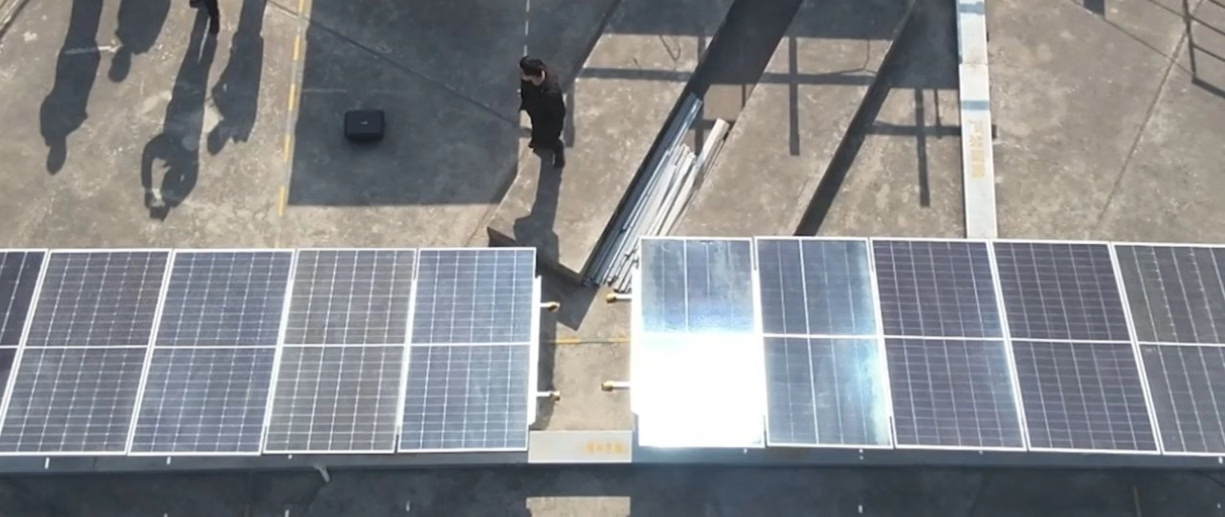
The glare-specific results provide further evidence. TÜV Rheinland recorded a Daylight Glare Probability of 0.29, below the 0.35 threshold for imperceptible glare, resulting in a Class AAA rating. Separate CPVT testing found glare brightness up to 78% lower than conventional module designs under defined test conditions. Together, these measurements quantify both the module's low overall reflection and the reduction of potentially disruptive glare.
The module’s rated power and efficiency provide the basis for assessing energy performance, while independent optical testing provides evidence of its glare behaviour. Together, these results show that glare control and photovoltaic performance can be assessed on their own measurable parameters.
For businesses and EPCs, this removes the need to treat glare control as an assumed compromise on energy performance. Instead, both sides of the project can be evaluated using documented data: optical measurements for glare and module specifications and site-specific modelling for energy yield and project economics.
This turns a perceived technology trade-off into a decision based on measurable project data.
Find out more about the Hi-MO X10 Guardian Anti-Glare series.

Lorem ipsum dolor sit amet, consectetur adipiscing elit. Suspendisse varius enim in eros elementum tristique. Duis cursus, mi quis viverra ornare, eros dolor interdum nulla, ut commodo diam libero vitae erat. Aenean faucibus nibh et justo cursus id rutrum lorem imperdiet. Nunc ut sem vitae risus tristique posuere.