Subscribe to the LONGi Newsletter

At the 3rd Sino-European Corporate ESG Best Practice Conference, the LONGi Europe President explained why coordinated energy systems, renewable energy, and international cooperation are becoming essential for industrial decarbonization.
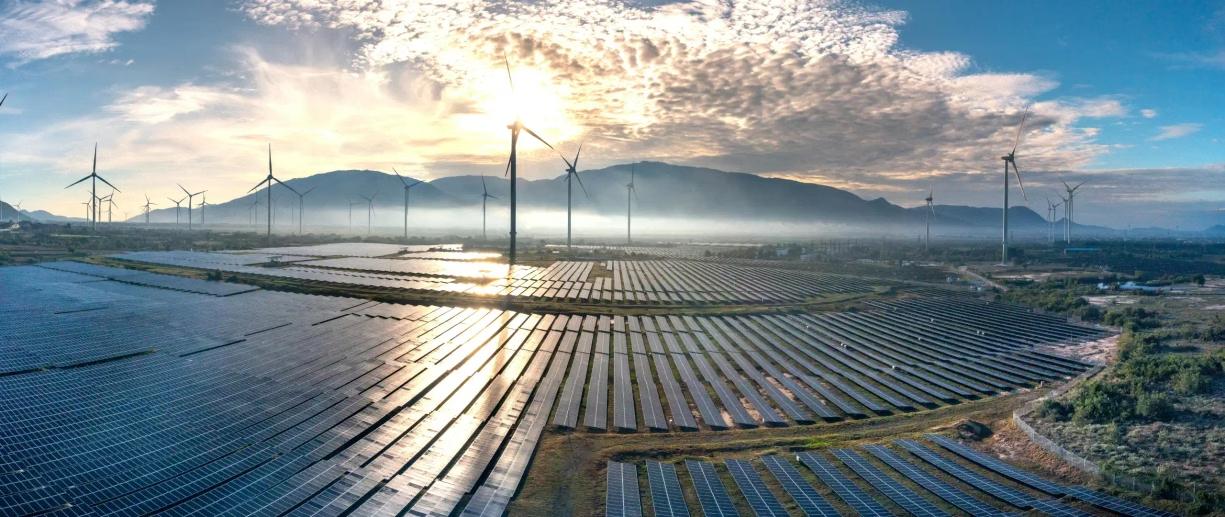
The rapid expansion of renewable energy has changed the questions facing the global energy transition. After years of strong deployment, many markets are less constrained by the ability to produce clean electricity than by the ability to use it efficiently at the right time and in the right place.
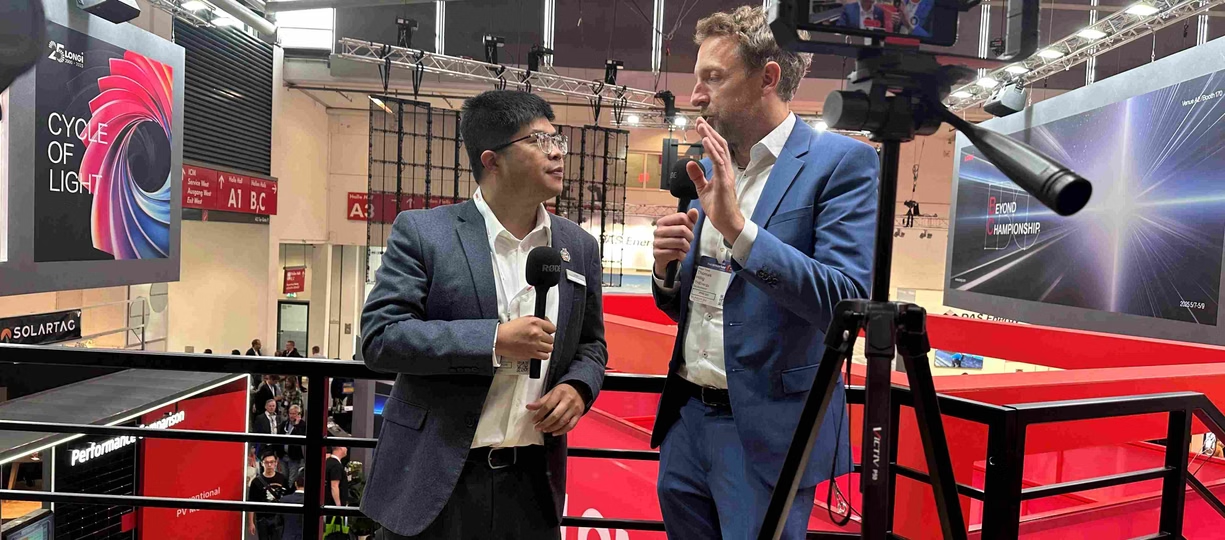
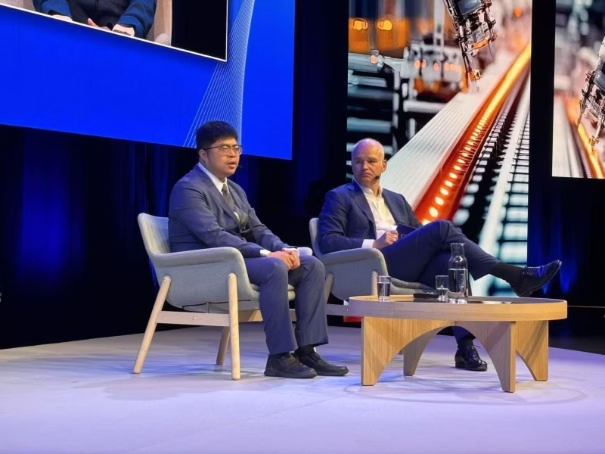
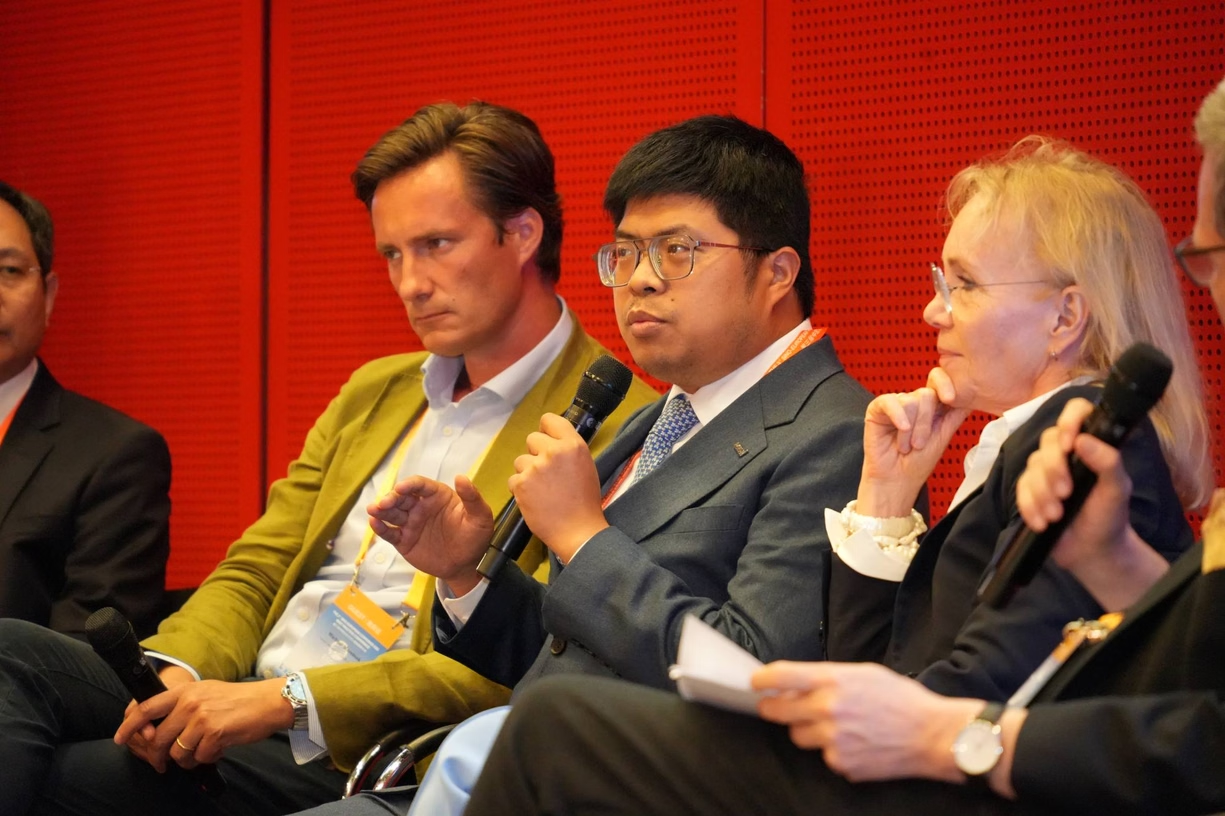
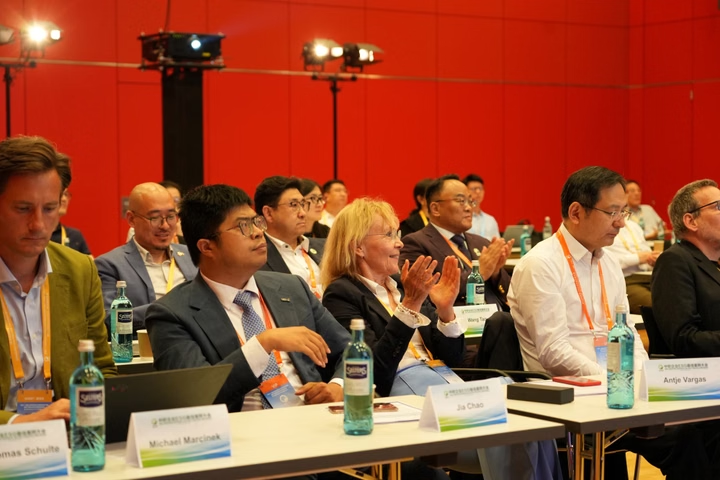
At the Zero-Carbon Parks Subforum of the 3rd Sino-European Corporate ESG Best Practice Conference, Jia Chao, President of LONGi's Europe Business Center, joined the panel discussion "Case Studies – International Cooperation Experiences in Zero-Carbon Industrial Park Development." Together with representatives from government, industry, finance, certification bodies, and technology companies, the discussion examined how international cooperation can accelerate the development of zero-carbon industrial parks and support industrial decarbonization.
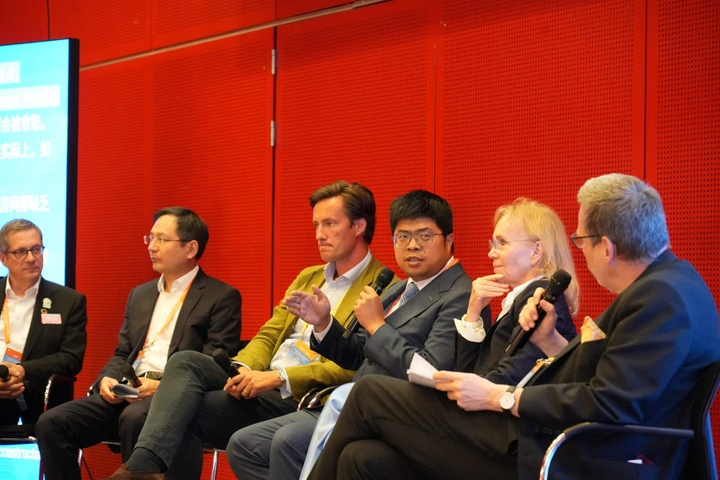
Jia joined representatives from Bosch, TÜV Rheinland, the German Sustainable Building Council (DGNB), Garbe Industrial, China Construction Bank, and other organizations to discuss practical approaches to industrial decarbonization. He argued that zero-carbon industrial parks would not be defined by renewable electricity generation alone. Their success would increasingly depend on intelligent energy systems capable of integrating solar power, energy storage, digital energy management, and industrial demand.
The energy transition has reached a turning point
According to Jia, the current challenges in renewable electricity markets should not be interpreted as a failure of the energy transition. Instead, they demonstrate how successful the first phase has been. Grid congestion, negative electricity prices, redispatch measures, and periods of surplus generation mark a structural shift in the energy market. For many years, the priority had been the deployment of renewable energy at scale. That phase had been necessary and successful. The next task would be different: renewable electricity would need to be stored, distributed, and managed more intelligently.
In this context, storage, digital energy management, and Power-to-X solutions become core elements of future energy systems. They allow companies to reduce curtailment, increase self-consumption, stabilize demand, reduce peak loads, and use existing grid infrastructure more efficiently.
Zero-carbon industrial parks start with company-level action
Jia also stressed that zero-carbon industrial parks would not start with infrastructure alone. They would start with the companies inside them.
Each company would first need to reduce emissions within its own operations and increase the share of renewable electricity in its own energy mix. Only then could cooperation across an industrial park create additional value.
Industrial parks can become more effective when companies share renewable energy generation, battery storage, charging infrastructure, and energy management systems. Such coordination can help keep renewable electricity within the local ecosystem for longer. It can also support peak shaving, backup power, load management, and better use of available grid capacity.
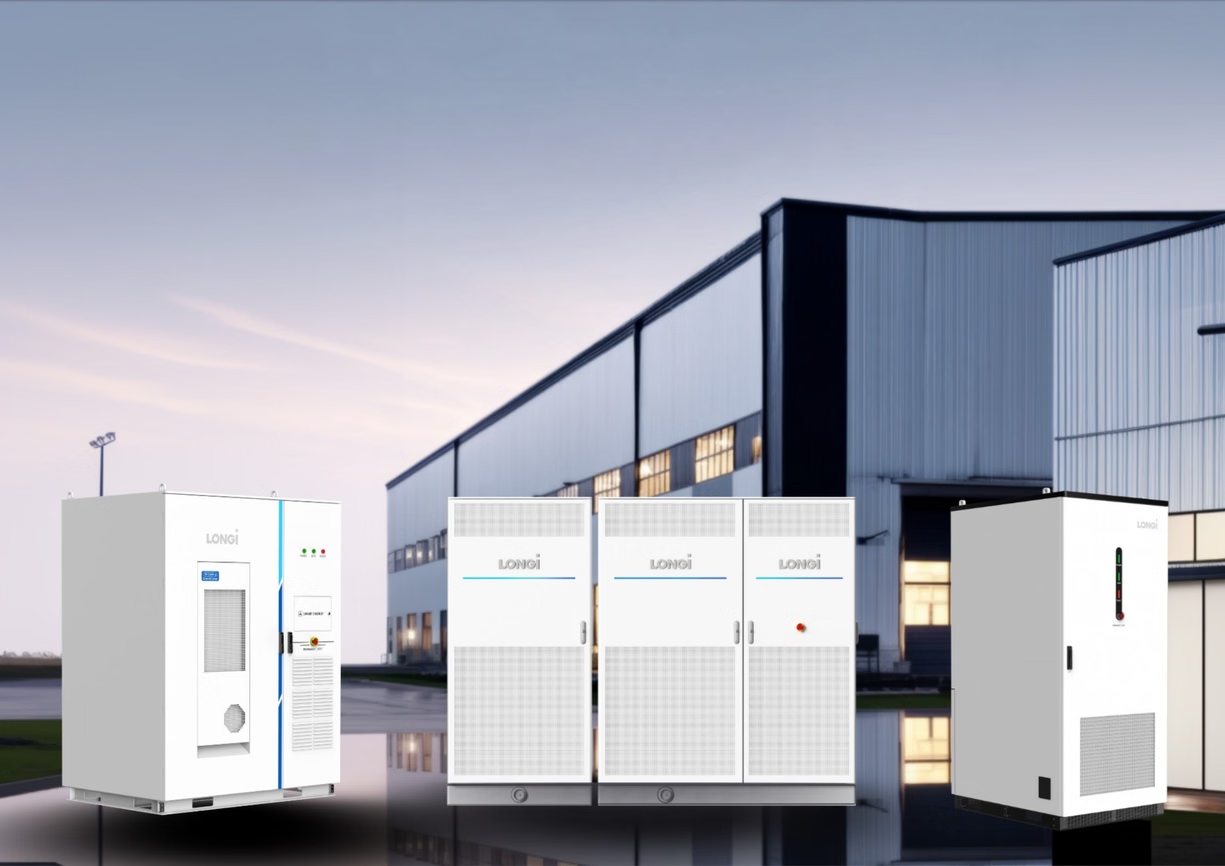
For LONGi, this makes storage a central part of industrial decarbonization. It is not merely an additional product category. It is one of the technologies that allow renewable electricity to become more useful for industrial customers.
ESG depends on connected industrial ecosystems
The panel also addressed the role of ESG in industrial transformation. Jia argued that ESG should not be reduced to reporting or compliance. It would need to become a practical framework for cooperation across industrial value chains.
This would require transparent carbon accounting, lifecycle assessment, common standards, certification systems, and reliable data. It also requires cooperation between manufacturers, suppliers, infrastructure operators, certification bodies, and industrial park developers.
The same principle would apply to energy infrastructure. Photovoltaics, storage, digital energy management, and industrial demand should not be planned as isolated elements. They need to operate as parts of one system, Jia said and added that reliable decarbonization would depend on intelligent coordination across the entire energy system. Intelligent senergy systems would provide the technological foundation for that integration.
Europe and China bring complementary strengths
International cooperation was another important theme of the discussion. Jia described both regions as contributors with different strengths.
Chinese companies would bring manufacturing scale, technology development, and implementation experience. European companies and institutions would contribute expertise in industrial engineering, energy efficiency, certification, lifecycle assessment, sustainable building design, and internationally recognized ESG frameworks.
According to Jia, practical zero-carbon industrial parks would emerge when these capabilities are combined. Such projects could create models that would not simply be copied elsewhere, but adapted to different markets, regulations, and industrial structures. His broader message was that decarbonization cannot be solved by one company, one technology, or one country. It is a system challenge that requires a systemic response.
Practical milestones are essential
The panel also discussed how companies can pursue climate objectives without undermining competitiveness. Jia advocated a phased approach with measurable milestones and realistic investment pathways. The first priority would be energy efficiency. Companies would first need to reduce unnecessary energy consumption and improve the efficiency of existing processes. The second step would focus on expanding renewable electricity together with storage, intelligent manufacturing, and digital energy management. The third would extend decarbonization across suppliers, logistics networks, and the wider industrial ecosystem.
Jia pointed to LONGi's own sustainability journey as an example of this phased approach. In 2024, renewable electricity represented 47.5% of the company's electricity consumption, while operational greenhouse gas emissions (Scope 1 and 2) fell by 37% year on year. Combined with hundreds of energy-efficiency projects, AI-assisted manufacturing, and the development of the photovoltaic industry's first Lighthouse Factory and zero-carbon factory practices, these measures illustrate how measurable progress can be achieved through continuous improvement rather than isolated initiatives.
Integrated energy systems define the next opportunity
Jia repeatedly returned to the importance of system efficiency. Higher module efficiency remains important. More efficient solar technology can generate more electricity from the same roof area, land area, and infrastructure investment. However, the next major efficiency gain will depend on how technologies work together. Solar generation, storage, and digital energy management need to be planned as one coordinated system.
This also explains LONGi's expansion beyond photovoltaic generation. With LONGi ONE, the company combines back contact photovoltaic technology, battery storage, and digital energy management within one integrated architecture. The objective is to help customers generate, store, manage, and use renewable electricity more effectively while improving the economic performance of renewable energy systems.
For zero-carbon industrial parks, this system view will become increasingly important. Their success will depend on the ability to connect renewable generation, storage, industrial demand, infrastructure, and ESG requirements within one coordinated framework.
Jia's contribution reflected a broader consensus emerging throughout the discussion which is that the next phase of the energy transition will depend on coordinated energy systems capable of integrating renewable generation, storage, and industrial demand. For zero-carbon industrial parks, that transition has already begun.

Lorem ipsum dolor sit amet, consectetur adipiscing elit. Suspendisse varius enim in eros elementum tristique. Duis cursus, mi quis viverra ornare, eros dolor interdum nulla, ut commodo diam libero vitae erat. Aenean faucibus nibh et justo cursus id rutrum lorem imperdiet. Nunc ut sem vitae risus tristique posuere.