Subscribe to the LONGi Newsletter

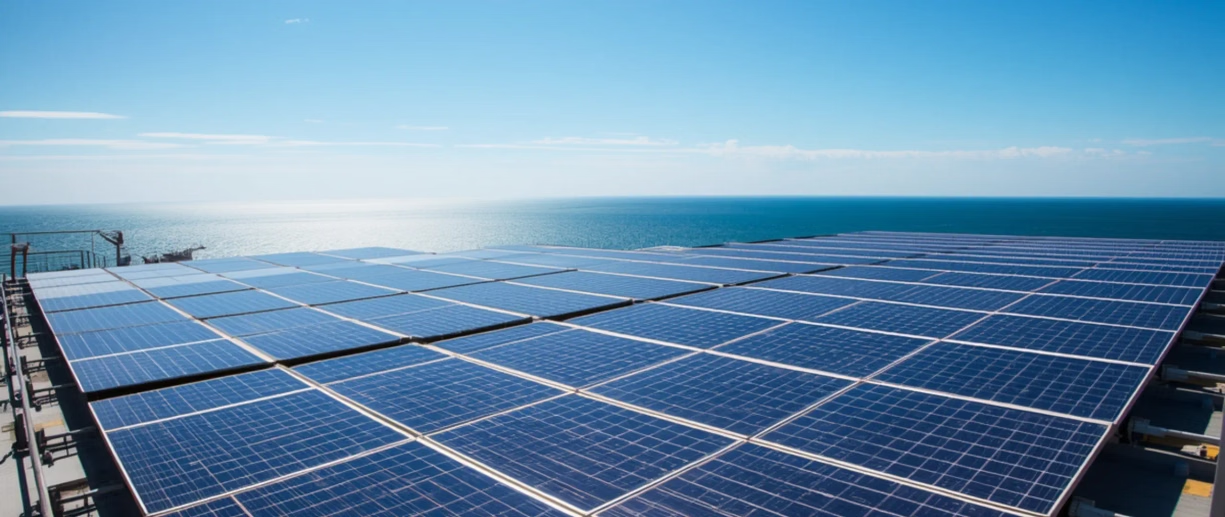
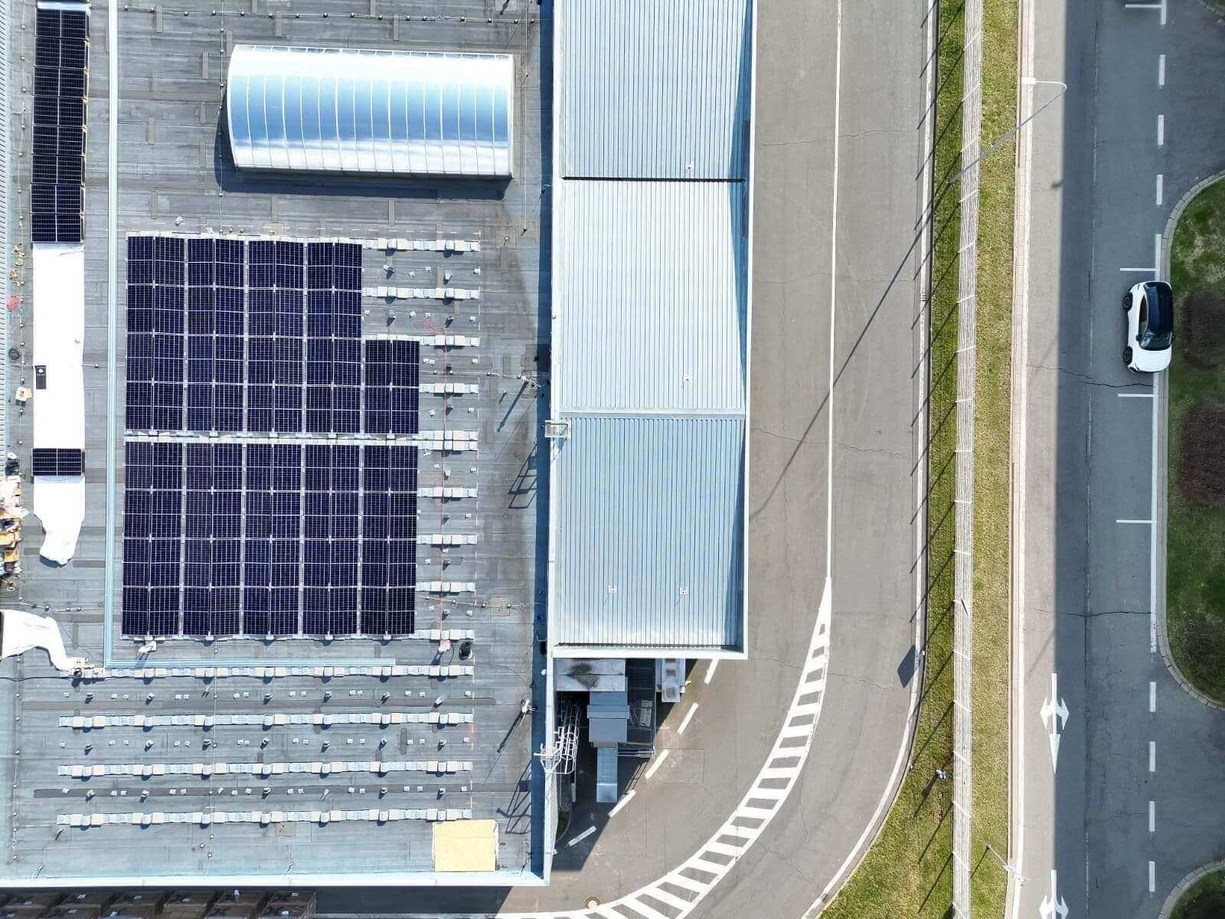
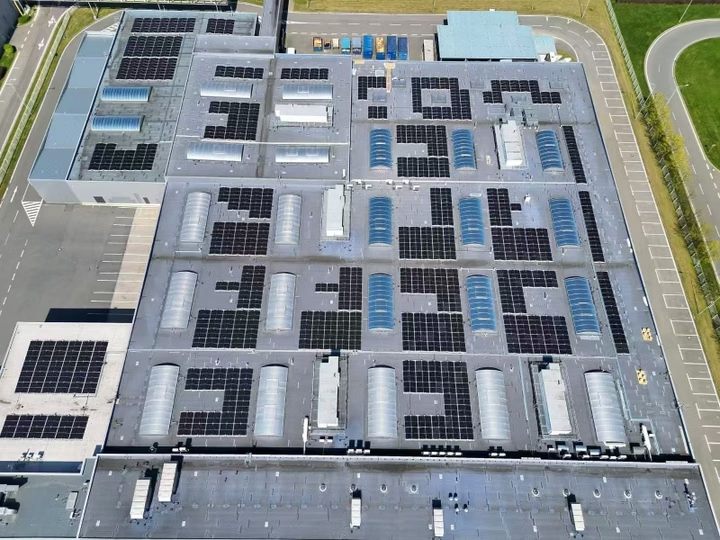
At the Hyundai manufacturing complex in Nošovice, Czech Republic, a new 648 kWp rooftop photovoltaic plant is now operational, transforming an industrial roof into ahigh-yield energy asset. Carefully designed by a local installer in cooperation with LONGi’s certified partner, Memodo, the project reflects a growing imperative across the Central European industrial landscape: mitigating exposure to grid volatility by generating reliable, decentralized clean energy.
Energy cost predictability drives new investments in commercial rooftops
For the Czech Republic, an economy heavily driven by its robust automotive and manufacturing sectors, energy cost predictability is a cornerstone of competitiveness. Following recent years of severe electricity price fluctuations across Europe, industrial facilities face immense pressure to optimize their operational expenditures (OPEX).
For large-scale manufacturing sites like the Hyundai complex, where operations consume vast amounts of power, transitioning to on-site solar is no longer merely an environmental target. It functions as a critical economic shield designed to significantly reduce routine energy expenses, safeguard profit margins, and support long-term business continuity.
HPBC 2.0 technology overcomes regional summer heat and winter overcast
Maximizing the available flat roof at the Nošovice complex required an East-West mounting configuration. While this layout increases panel density, it typically traps summer heat, leading to thermal degradation and output losses in conventional modules.
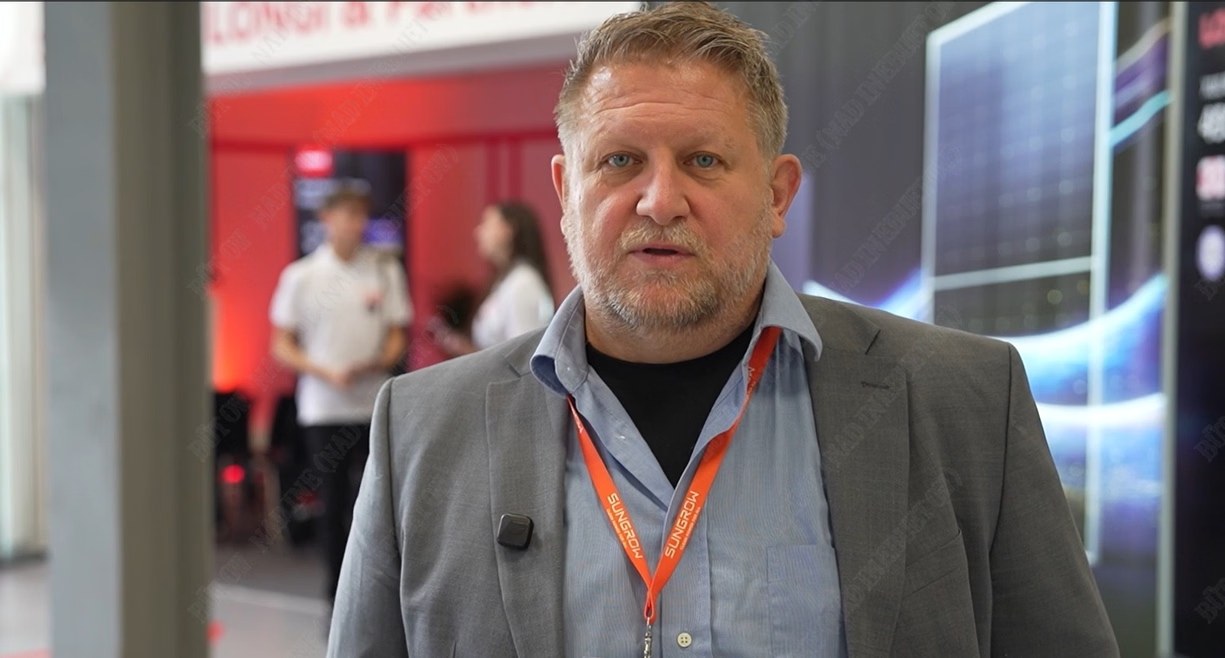
LONGi’s HPBC 2.0 (Hybrid Passivated Back Contact) technology directly counters this thermal challenge. “Our 2nd-generation Back Contact technology allows modules to operate up to 3°C cooler, delivering up to 8% higher overall performance in these constrained configurations,” noted Mr. Čelovský from LONGi.
But managing summer heat is only half the operational reality. Czechia is characterized by moderate to heavy cloud cover and lower solar irradiance during the long winter months. These conditions can pose severe challenges for conventional solar modules.
With afront-side busbar-free design, LONGi’s modules capture more light, which technical specifications indicate results in 2.27 percent higher efficiency than conventional TOPCon solutions and up to 18 percent better output inlow-light conditions. This is an ideal feature for the Czech climate, definedby variable sunlight and seasonal shifts, where solar systems must be engineered for consistent, reliable output throughout the entire year.
Optimized design reduces BOS and labor costs by up to 14%
Beyond all-season energy yield, the choice of LONGi Hi-MO X10 modules directly impacted the project's installation economics. Thanks to their higher efficiency and optimized footprint, the team was able to reach the 648 kWp capacity target using significantly fewer individual panels.
This streamlined approach translated directly into measurable balance of system (BOS) savings.By handling fewer modules, the project achieved a 10% reduction in mounting structure costs and up to a 14% saving in installation labor time.Logistically, it saved the equivalent of seven pallets of material, drastically reducing rooftop transport constraints and accelerating the project completion timeline.
The Nošovice installation serves as a practical blueprint for industrial resilience
The 648 kWpinstallation at the Nošovice complex stands as a clear reference point for the wider manufacturing sector. By combining advanced, climate-optimized PV technology with strong local partnerships, the project demonstrates how industrial facilities can effectively optimize rooftop space, lower upfront capital costs, and neutralize external energy risks. It proves that for today's CEE businesses, energy independence is a highly achievable and financially sound reality.

Lorem ipsum dolor sit amet, consectetur adipiscing elit. Suspendisse varius enim in eros elementum tristique. Duis cursus, mi quis viverra ornare, eros dolor interdum nulla, ut commodo diam libero vitae erat. Aenean faucibus nibh et justo cursus id rutrum lorem imperdiet. Nunc ut sem vitae risus tristique posuere.