Subscribe to the LONGi Newsletter

Snow is one of the few weather conditions that can bring a photovoltaic system to a complete standstill. Even after snowfall ends, modules often remain covered for hours or days before electricity generation resumes. A new reverse current approach developed through the partnership between LONGi and ATMOCE offers an alternative. Instead of waiting for the sun to melt the snow naturally, controlled power is supplied from the grid back to the modules, accelerating snow removal and allowing electricity generation to resume sooner.
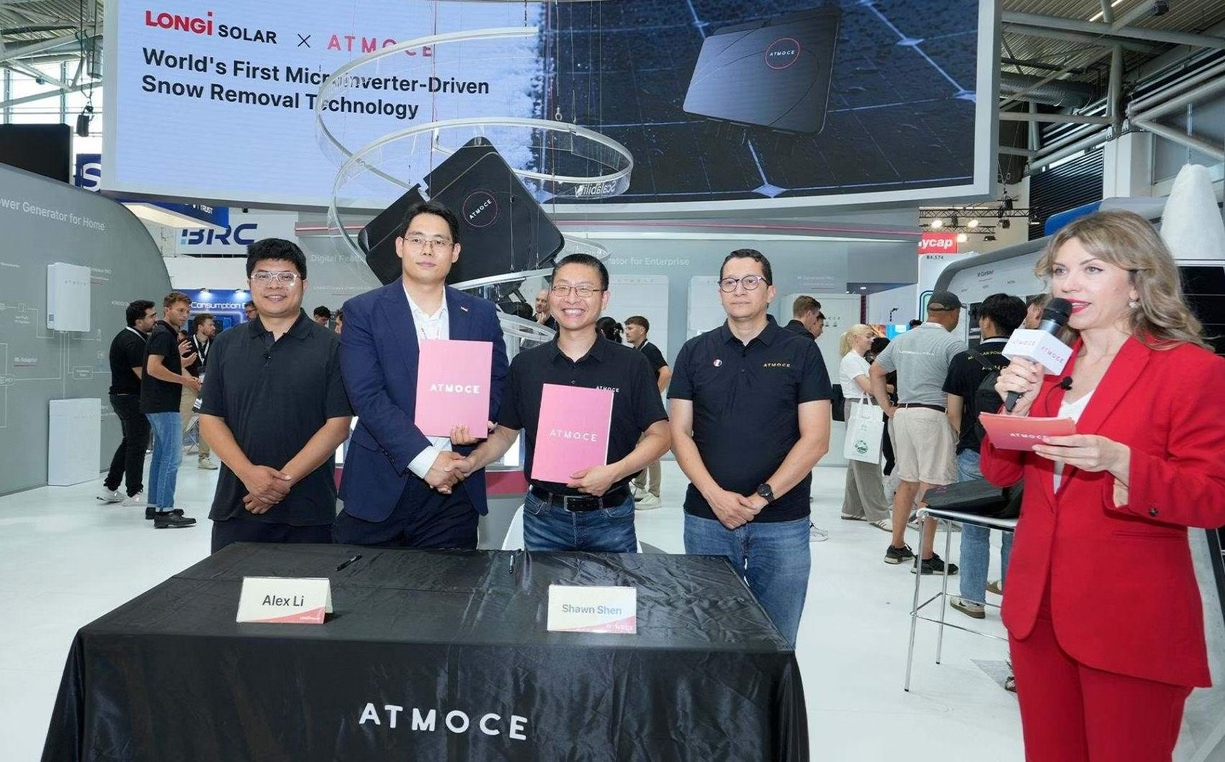
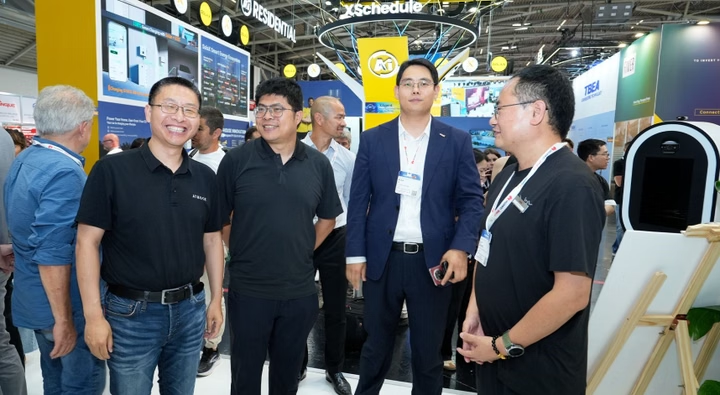
LONGi and ATMOCE officially announced their strategic partnership at Intersolar Europe 2026. The companies combined LONGi's advanced back contact (BC) module technology with ATMOCE's intelligent microinverter platform, the two companies are developing solutions that address real operating challenges faced by photovoltaic systems.
One of the first results of this collaboration is the world's first microinverter-driven snow removal technology, introduced at Intersolar Europe 2026. The solution addresses a challenge that affects residential and commercial PV systems across Alpine regions, Northern Europe and other cold-climate markets, where snow accumulation can significantly reduce winter energy production. The innovation also gained industry recognition, with ATMOCE's MI-Series microinverter named a finalist for The smarter E AWARD 2026.
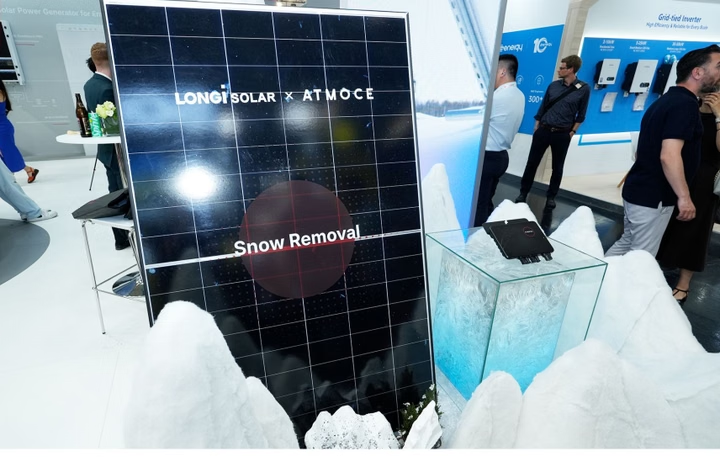
Reverse current technology enables automated snow removal for photovoltaic systems
Snow-covered PV systems are traditionally left to clear naturally or require manual intervention. Both approaches reduce energy production and can create practical challenges, particularly on rooftops that are difficult or unsafe to access during winter.
The solution developed by LONGi and ATMOCE takes a different approach. The system combines LONGi's BC module technology with ATMOCE's microinverter platform and uses controlled reverse current to transfer power from the grid back to the solar modules. Instead of waiting for sunlight to restart electricity generation, the modules are gently warmed, accelerating snow melting and allowing the system to resume operation much sooner after snowfall. The system remains ready to activate even when the modules are completely covered by snow.
Because the process is electronically controlled, no additional mechanical equipment or manual intervention is required.
Testing confirms BC modules deliver efficient snow removal without compromising reliability
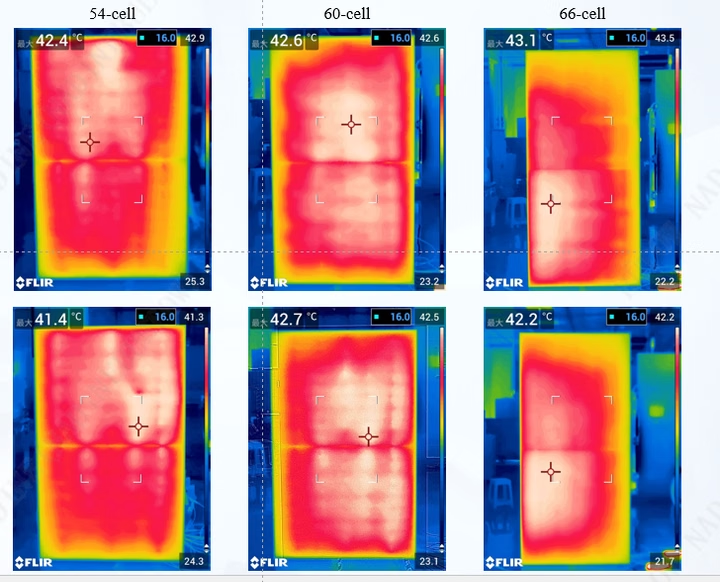
Before introducing the technology, LONGi carried out an extensive validation programme to assess the impact of repeated reverse current operation on its BC modules. The testing included thermal monitoring, IV measurements and electroluminescence (EL) inspections across 54-cell, 60-cell and 66-cell BC modules. After 30 reverse current cycles, all tested modules continued to operate normally, with no anomalies detected in IV or EL results.
The tests also confirmed that reverse current generates uniform heat distribution across the module, with temperatures stabilising after approximately 30 minutes of operation. This uniform heating is essential for efficient snow removal while avoiding localised thermal stress.
LONGi also compared its HPBC 2.0 modules with TOPCon modules under the same test conditions. The BC modules heated up faster and reached a higher steady-state temperature, enabling more efficient snow melting with lower energy consumption. Together with the long-term reliability demonstrated during testing, the results show that LONGi's BC module architecture is particularly well suited for reverse-current snow removal.
Greater control over snow removal and faster system recovery for higher energy yields
For PV owners in Alpine regions, Scandinavia and other cold-climate markets, snow accumulation can significantly reduce annual energy production. Earlier snow removal means systems can return to normal operation sooner after snowfall, helping maximise winter energy yields. The technology also introduces greater flexibility. Users can activate snow removal before forecast snowfall, configure operating periods and monitor the process through ATMOCE's software platform. Different operating modes allow the system to adapt to varying weather conditions while balancing energy consumption with recovery speed.
Real-world performance moves to the centre of photovoltaic innovation
The project illustrates how future advances in solar increasingly come from combining expertise across different parts of the energy system. LONGi contributes high-efficiency BC module technology designed for demanding operating conditions. ATMOCE contributes its MI-Series microinverter platform, which enables the controlled reverse current required for automated snow removal. Together, these technologies create capabilities that neither component could deliver on its own.
The partnership shows how photovoltaic innovation is evolving. The rapid expansion of solar energy worldwide has broadened the industry's focus beyond higher module efficiency. Increasing attention is now directed towards improving system performance under real-world operating conditions, extending energy production and increasing system resilience throughout the year.
For LONGi, this collaboration represents another step towards developing integrated solutions that help customers generate more clean electricity, even under some of the industry's most challenging environmental conditions.

Lorem ipsum dolor sit amet, consectetur adipiscing elit. Suspendisse varius enim in eros elementum tristique. Duis cursus, mi quis viverra ornare, eros dolor interdum nulla, ut commodo diam libero vitae erat. Aenean faucibus nibh et justo cursus id rutrum lorem imperdiet. Nunc ut sem vitae risus tristique posuere.